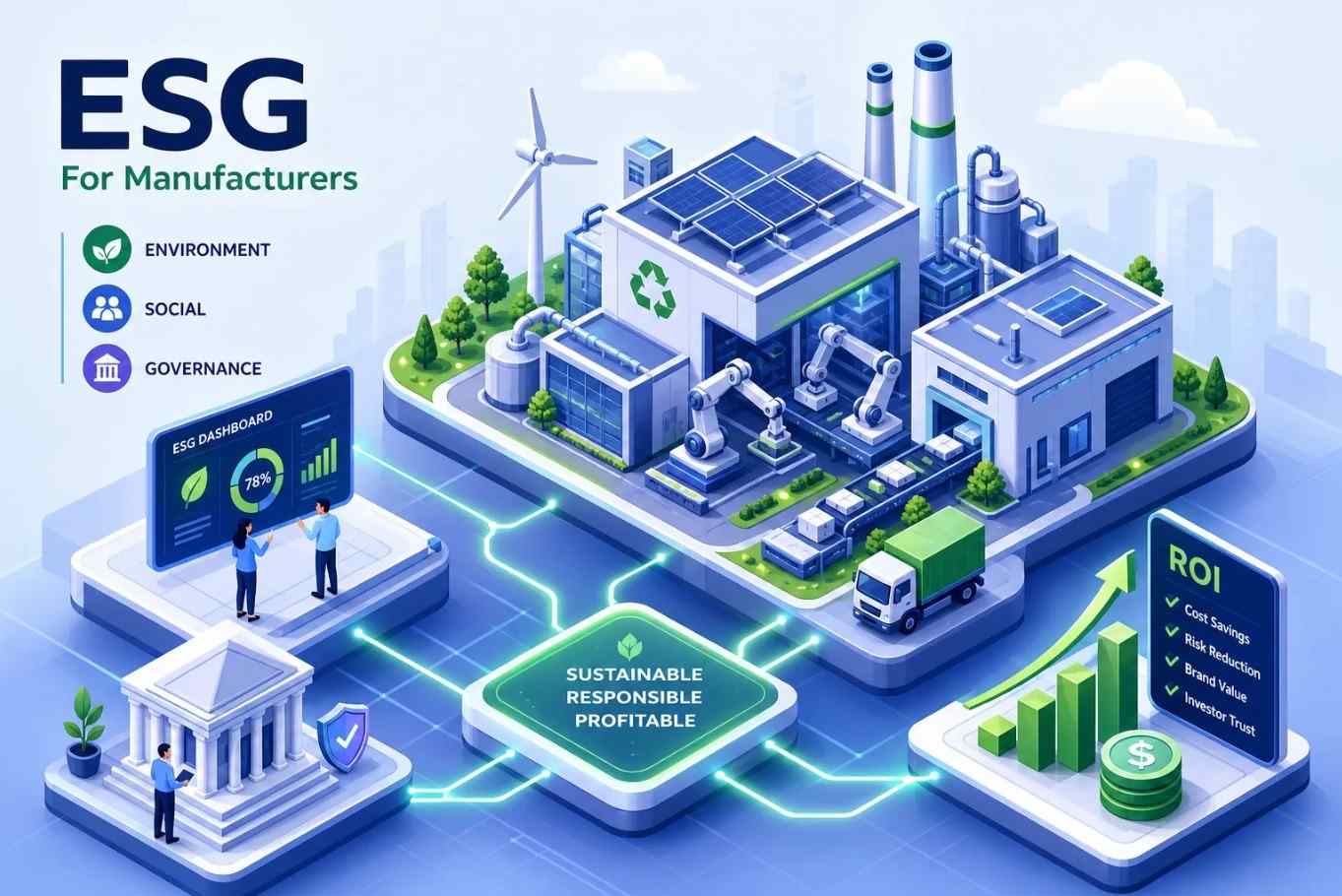
Why ESG pressure on manufacturers has become non-negotiable: ESG Consulting for Manufacturers
Manufacturers today face sustainability requirements from three directions at once. International buyers mandate audit-ready social and environmental compliance as a condition of contract renewal. Institutional investors apply ESG screens when evaluating procurement decisions and portfolio exposure. Regulators in key markets, from the EU's CSRD to SEBI's BRSR requirements in India, are tightening disclosure obligations with each successive year. ESG compliance is no longer an optional branding exercise; it is a commercial prerequisite for retaining contracts and accessing capital.
How buyer mandates are reshaping supplier qualification
Large global buyers in retail, FMCG, and automotive now require suppliers to pass SMETA or SA 8000 audits, submit verified emissions data, and meet energy reduction targets before renewing contracts. Buyers such as H&M, Walmart, and Tesco treat SMETA outcomes as gating criteria, not courtesy checks. A supplier with unresolved major non-conformances in worker safety, labour practices, or environmental controls is placed on hold or removed from the approved vendor list, regardless of price competitiveness. Supplier scorecards are updated annually, which means a factory that passes one cycle must maintain its ESG posture continuously, not just before audit season.
What investors and lenders now expect from listed manufacturers
ESG-linked financing has made sustainability performance directly relevant to cost of capital. Manufacturers with strong, documented ESG programmes are accessing debt at 10 to 50 basis points lower cost compared to peers without structured sustainability disclosure. For a mid-sized plant carrying significant term debt, that spread difference represents a material annual saving. Beyond financing cost, institutional investors and development finance institutions are applying ESG screens to equity and debt placement decisions, making poor ESG governance a source of real commercial risk rather than a reputational inconvenience.
What does an ESG consulting firm do for a manufacturing company: core services
The clearest way to understand what a manufacturing-focused ESG engagement delivers is to map each service to a concrete deliverable, not a vague capability. Here is what a structured ESG consulting engagement for a manufacturing company actually produces.
Gap analysis and ESG risk assessment
The first task any credible ESG consulting firm performs is establishing where the manufacturer currently stands. This involves a structured assessment of energy consumption, Scope 1 and 2 emissions, waste and water data, occupational health and safety practices, labour compliance, and existing reporting practices. The output is a gap analysis: a clear map of where current performance falls short of buyer requirements, reporting frameworks, or regulatory obligations. At DLV ESG Consulting Group LLP, this process covers materiality and compliance gaps simultaneously, giving manufacturers a single prioritised view rather than separate reports from separate workstreams.
Emissions inventory, energy audits, and decarbonisation planning
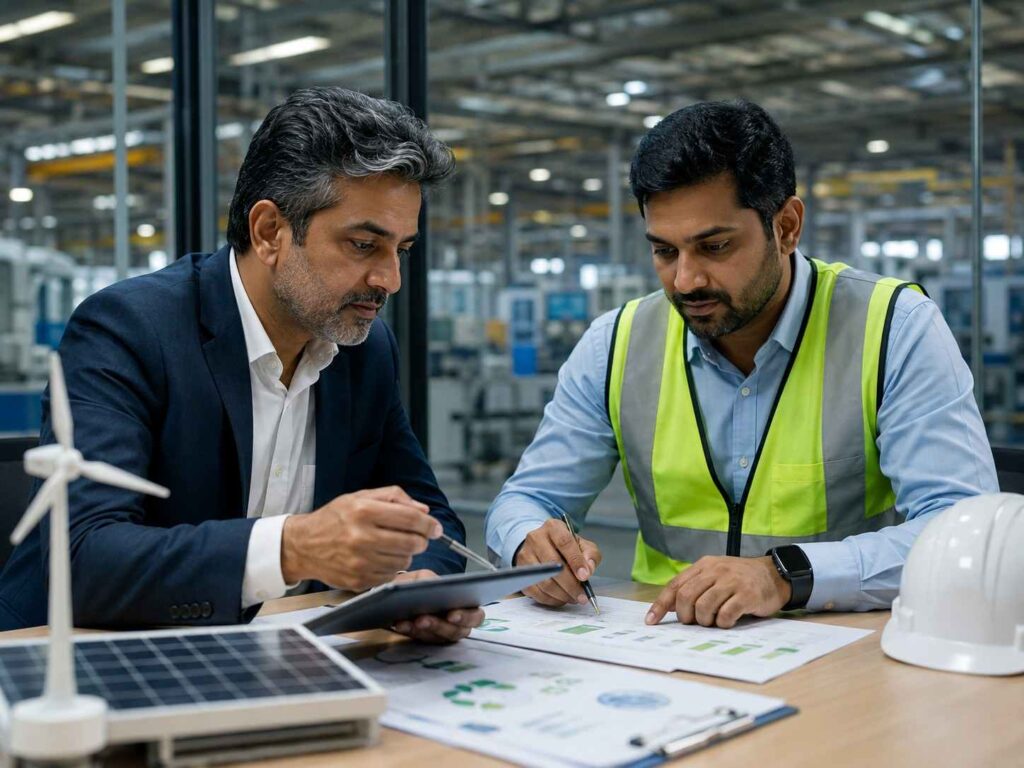
A full emissions inventory covers Scope 1 (direct combustion and process emissions), Scope 2 (purchased electricity), and Scope 3 (supply chain, logistics, and product use-phase emissions), all aligned to the GHG Protocol. Energy audits identify inefficiency in HVAC systems, compressed air networks, motors, lighting, and process equipment, consistently the largest efficiency opportunities in Indian manufacturing plants. The consulting firm then develops a decarbonisation roadmap with specific targets, timelines, and abatement options, ranging from equipment upgrades to renewable energy procurement. Scope 3 data is increasingly required by European and US buyers, making this component particularly valuable for export-oriented factories.
Social compliance, ISO certification, and audit preparation
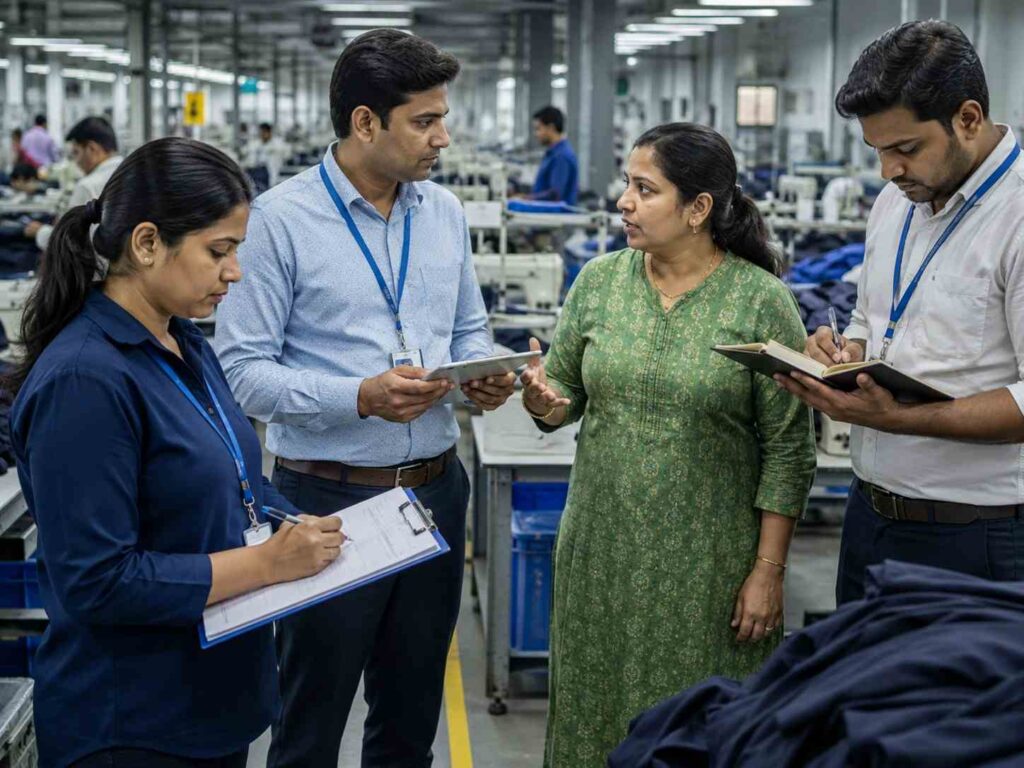
Many manufacturers need to prepare for a SMETA or SA 8000 social audit while simultaneously pursuing ISO certification for quality (ISO 9001), environment (ISO 14001), or worker safety (ISO 45001). A capable ESG consulting firm runs both tracks in parallel, combining corrective action plan development with certification documentation preparation. This is where the integrated model creates genuine efficiency: DLV ESG Consulting Group LLP covers social compliance advisory, ISO certification support, and BRSR reporting within a single engagement, eliminating the version-control problems that arise when separate vendors work on overlapping deliverables.
For listed Indian manufacturers, BRSR compliance under SEBI is a parallel obligation. For FY 2025-26, the top 500 listed entities by market capitalisation are required to submit BRSR Core disclosures with reasonable assurance, covering nine ESG attributes including GHG emissions intensity, water, energy, and worker well-being metrics. Value-chain disclosures also apply from FY 2025-26, covering upstream and downstream partners that represent 75% of purchases and sales by value. Getting this right requires structured data collection at the plant level, not just a reporting exercise at headquarters.
How a consulting engagement typically unfolds: phases and timelines
A realistic ESG engagement for a mid-sized manufacturing plant runs three to six months for diagnosis and strategy development, extending to six to twelve months if implementation support and audit preparation are included. Understanding the phases helps manufacturers plan internal resource allocation alongside the consulting workstream.
Phase 1 to 3: Baseline, gap analysis, and materiality assessment (weeks 1 to 10)
The engagement opens with a scoping and mobilisation phase of one to two weeks, confirming plant boundaries, data owners, applicable standards, and deliverable timelines. Baseline data collection follows for weeks two through eight, covering utility records, production data, HR and payroll information, safety incident logs, procurement data, and environmental permits.
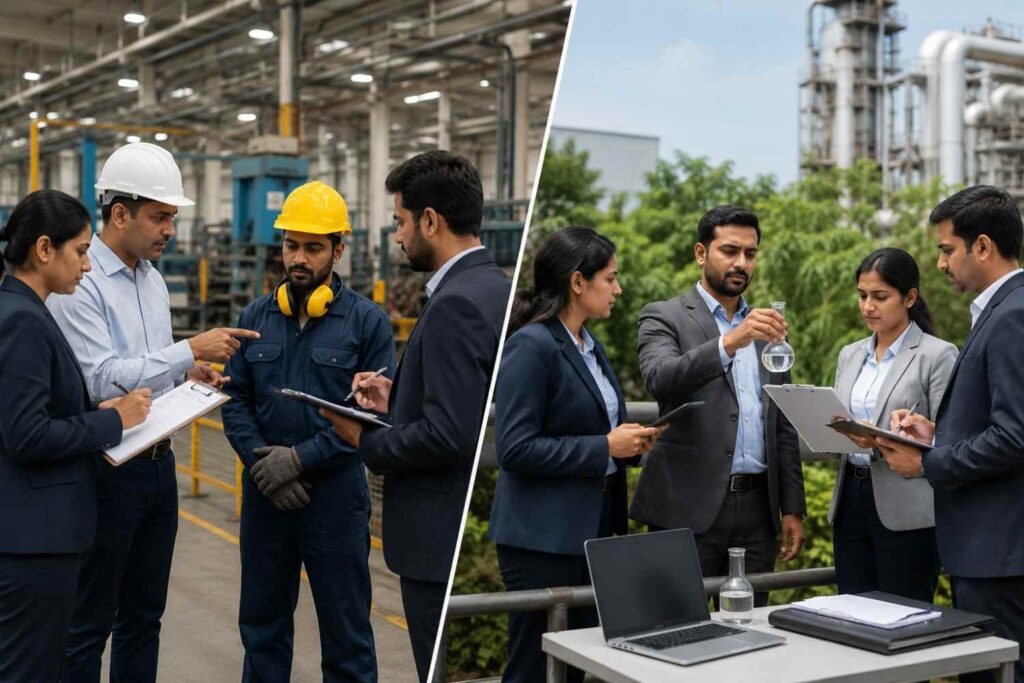
Materiality and gap analysis runs in parallel from weeks four through ten, comparing current performance against buyer requirements, certification standards, and regulatory obligations. The deliverables at this stage include a regulatory obligations map, an ESG baseline report, and a prioritised gap analysis. This work is hands-on at the plant level; it cannot be completed through desk research alone.
Phase 4 to 6: Strategy, roadmap, reporting, and audit readiness (weeks 8 to 20+)
The second half of the engagement translates the gap analysis into an actionable ESG strategy with KPIs, named owners, and implementation timelines. For manufacturers preparing buyer disclosure packs, draft reports are aligned to GRI, BRSR, or TCFD as required. For factories preparing for a specific audit, whether SMETA, ISO 14001, or SA 8000, the deliverables shift toward documentation packages, corrective action evidence, and assurance-ready evidence packs. The timeline compresses when a specific audit deadline is fixed, which is why engaging a consulting firm at least three months ahead of an audit submission date is strongly advisable.
Which ESG frameworks and standards actually matter for manufacturers
Framework proliferation is one of the most common sources of confusion for manufacturing companies beginning their ESG journey. The practical question is not which framework is most comprehensive, but which combination applies to a specific manufacturer given their markets, buyer requirements, and regulatory exposure.
GRI, TCFD, CSRD, and BRSR: what each requires and when it applies
GRI covers broad ESG reporting for stakeholder transparency and is the most commonly requested framework in international buyer questionnaires. TCFD addresses climate-related financial risk and is recommended or required in several major markets, covering governance, strategy, risk management, and emissions metrics. CSRD, with its ESRS standards, is mandatory for companies operating in or supplying to the EU and requires a double materiality assessment, meaning the company must disclose both how sustainability issues affect the business and how the business affects people and the environment. BRSR is India-specific and mandatory for listed companies under SEBI regulations.
For an export-oriented Indian manufacturer, the practical reporting stack typically combines GRI for buyer disclosure, BRSR for SEBI compliance, and TCFD for investor communication. A consulting firm that understands all three frameworks can build a single data collection process that satisfies all three simultaneously, rather than running separate disclosure programmes in parallel.
When ISO certification strengthens ESG positioning
ISO 14001 and ISO 45001 are operational management system standards, not ESG reporting frameworks. The distinction matters because manufacturers sometimes treat certification as a substitute for ESG disclosure, which it is not. What ISO certification does is provide the documented controls, monitoring systems, and audit trail that ESG disclosure frameworks reference when they ask for evidence of environmental and safety management. A factory with ISO 14001 certification has centralised environmental data, documented compliance obligations, and a verified management system. That foundation makes buyer questionnaires faster to complete and sustainability reports more credible when they go to third-party assurance.
What measurable ROI looks like after ESG consulting
The business case for ESG consulting services for manufacturing companies is measurable across three concrete categories: operational savings, stronger commercial positioning, and improved financing access. Manufacturers who approach ESG as a managed programme, rather than a periodic compliance sprint, consistently outperform peers on all three dimensions.
Operational savings and emissions performance
Manufacturers that complete ESG consulting engagements with implementation support typically achieve 15 to 25% reductions in energy costs and associated carbon emissions through efficiency audits, equipment upgrades, and renewable integration. In one documented engagement, a Gujarat-based process manufacturer achieved approximately USD 2.3 million in annual energy savings following a full efficiency audit and renewable energy transition programme. Response time to customer ESG questionnaires dropped by 60% in a sector-focused engagement, which translates directly to faster buyer qualification cycles and reduced administrative burden on plant management teams.
Better buyer retention, rating outcomes, and financing terms
Verified, audit-ready ESG data satisfies buyer scorecards and investor ESG screens in ways that informal assurances do not. Manufacturers with documented ESG programmes qualify for ESG-linked financing at 10 to 50 basis points lower cost of debt; some engagements have delivered 15 to 30 basis points improvement in financing rates. For a plant with significant term debt, that improvement is a material annual saving that far exceeds the cost of the consulting engagement itself.
Structured ESG governance also supports workforce stability. Studies of manufacturing operations tracking turnover against environmental and safety management maturity consistently find meaningfully lower attrition at plants with certified management systems, reducing recruitment and onboarding costs in ways that compound over a multi-year engagement.
How to choose the right ESG consulting partner for your plant
Once a manufacturer accepts the case for engaging an ESG consultant, the next question is how to evaluate and brief a firm. The criteria that separate a useful engagement from an expensive document-production exercise come down to sector experience and service breadth.
What sector-specific experience actually means in practice
A generalist consulting firm can explain ESG frameworks accurately. A firm with deep experience in manufacturing, textiles, or FMCG understands the specific audit triggers, buyer questionnaire formats, and production-floor data challenges that determine whether a factory passes or fails a SMETA or SA 8000 audit. When evaluating prospective consultants, ask directly about their experience with your specific buyer requirements, which frameworks they have supported in your sector, and whether they can provide references from plants with a similar production profile and export market. The answers reveal quickly whether the firm has worked through your specific challenges before or is learning on your project.
Why integrated coverage matters more than it sounds
Most export-oriented manufacturers need ESG strategy, ISO certification support, BRSR reporting, social compliance preparation, and fire safety compliance addressed simultaneously, not sequentially. Engaging separate vendors for each workstream creates version-control problems, missed dependencies between parallel workstreams, and duplicated cost when multiple firms collect overlapping data from the same plant team.
DLV ESG Consulting Group LLP covers all these tracks under one NABCB-compliant, IAF- and QCI-recognised process. Manufacturers get a single engagement, a coordinated roadmap, and audit-ready documentation that satisfies buyers, investors, and regulators without building an internal ESG team from scratch. For a mid-sized plant facing multiple simultaneous compliance obligations, that coordination is not a convenience, it is the difference between meeting deadlines and missing them.
Moving from reactive to audit-ready
An ESG consulting firm helps a manufacturing company move from ad-hoc compliance to a structured, audit-ready sustainability posture. The process covers gap analysis, emissions and energy data, social and labour compliance, certification preparation, and disclosure reporting, typically across a three to six-month engagement with clear deliverables at each phase.
The returns are concrete: lower energy costs, stronger buyer qualification, and improved financing terms backed by documented ESG performance that holds up under third-party scrutiny. The compounding effect of these gains means that the cost of the consulting engagement is typically recovered within the first operating year.
If you are still asking what does an ESG consulting firm do for a manufacturing company, the most practical next step is a structured conversation with a firm that has done it before. Get in touch with the team at DLV ESG Consulting Group LLP to understand how an end-to-end engagement is structured for manufacturers across India. The initial scoping conversation is no-obligation; the gap analysis that follows gives your management team a precise picture of exactly where the plant stands and what it takes to become audit-ready.