Quick answer: Businesses in Noida need ESG consulting to comply with SEBI's BRSR framework, get ISO certified (9001, 14001, 45001), meet fire safety regulations, and satisfy buyer-driven social compliance audits like SMETA. DLV ESG Consulting Group helps Noida-based manufacturers, exporters, and MSMEs implement these requirements end-to-end, from gap analysis to final certification.

Noida has become one of the fastest-growing industrial and corporate hubs in North India. From the electronics manufacturing belt in Sector 63 to the export units operating out of the Noida Special Economic Zone (NSEZ), thousands of businesses now face growing pressure to prove they operate responsibly, safely, and sustainably. If you run a business in Noida and are unsure where ESG compliance fits into your operations, this guide breaks down everything you need to know.

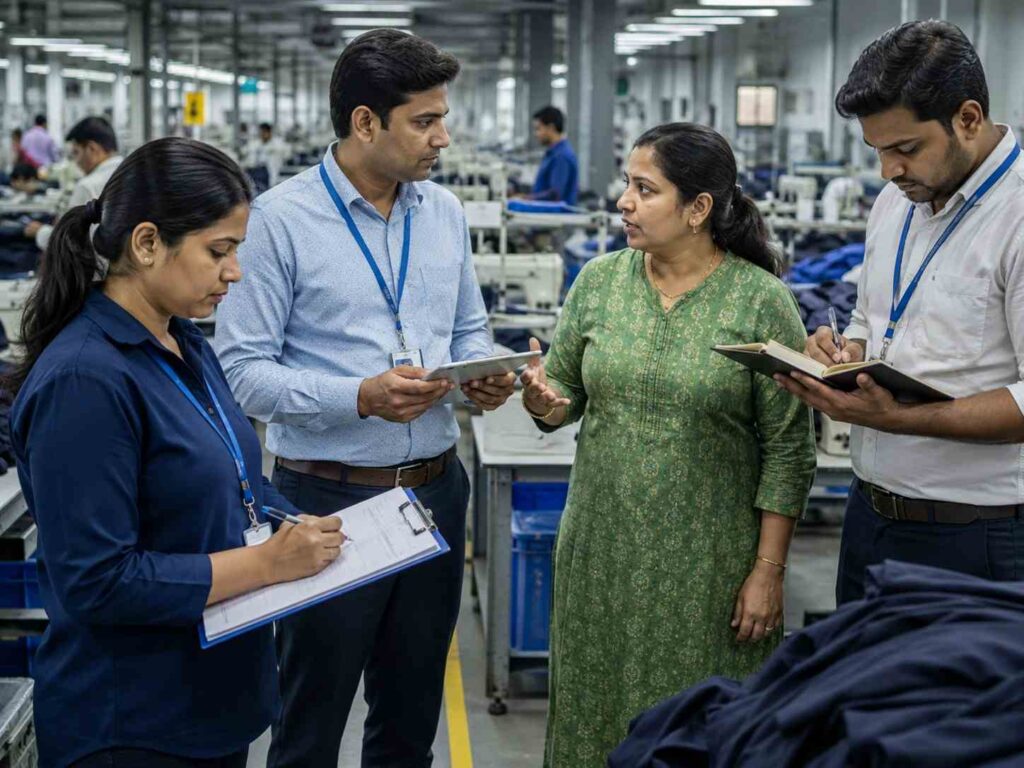
ESG consulting services in Noida industrial hub

Noida's industrial and corporate ecosystem is unique — it combines heavy manufacturing, IT and corporate offices, export-oriented units, and a large base of MSMEs, all operating under increasing regulatory scrutiny. ESG consulting in Noida matters for several interconnected reasons, and understanding them helps business owners prioritize where to act first.

1. Regulatory Pressure Is Increasing

SEBI's BRSR (Business Responsibility and Sustainability Reporting) mandate initially applied only to the top 1,000 listed companies in India by market capitalization. However, this requirement is cascading down the supply chain. Many Noida-based manufacturers and suppliers who sell to larger listed companies are now being asked to submit ESG data themselves, even though they are not directly regulated by SEBI. This "trickle-down compliance" effect is one of the biggest reasons ESG consulting demand has grown so quickly in Noida over the past two years.

2. International Buyers Are Setting the Bar

Export units based in Noida — particularly in the electronics, textiles, and FMCG sectors — increasingly find that international buyers will not sign contracts without proof of ethical and sustainable operations. Audits like SMETA (Sedex Members Ethical Trade Audit) and certifications like SA 8000 have become standard pre-conditions for doing business with European and North American retailers and brands.

3. Safety Compliance Is Non-Negotiable

Fire safety regulations for factories, warehouses, and commercial buildings in Noida are strictly enforced by local authorities. Given the density of industrial activity in sectors like Noida's manufacturing belt, a single safety lapse can result in shutdowns, penalties, or far worse. Fire safety training and periodic audits are now considered a baseline requirement, not an optional add-on.

4. Investor and Lender Expectations Are Changing

Banks, NBFCs, and private equity investors are increasingly factoring ESG performance into their lending and investment decisions. A Noida-based company with a documented ESG framework, credible sustainability reporting, and a clean compliance record often finds it easier to access capital on favorable terms.

Key ESG and Compliance Services Noida Businesses Commonly Need

Let's break down the specific services that most Noida-based companies end up needing as they build out their ESG and compliance framework.

1. BRSR Reporting for Noida Companies

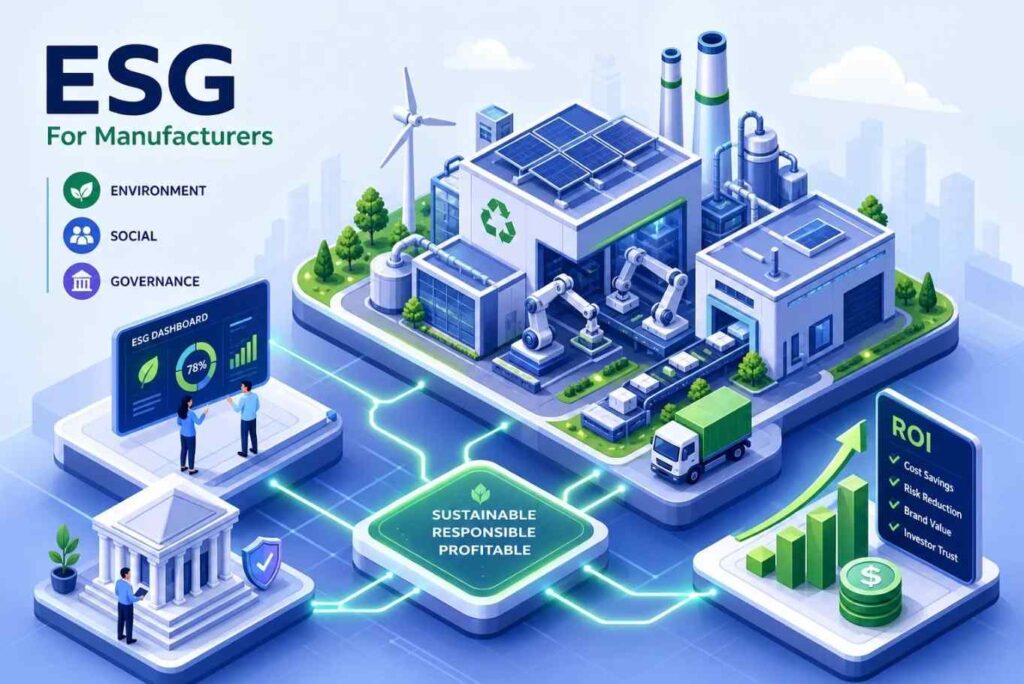
Business Responsibility and Sustainability Reporting (BRSR) is now a core compliance requirement for listed companies and, increasingly, their supply chain partners in Noida. A BRSR report typically requires disclosure of environmental performance (energy use, water consumption, waste management), social initiatives (employee welfare, community engagement, diversity data), and governance practices (board structure, ethics policies, grievance redressal mechanisms).

For most first-time filers in Noida, the biggest challenge is not understanding the framework itself but rather data collection. Pulling together emissions data, HR records, vendor information, and governance documentation into one coherent, audit-ready report can take weeks if a company doesn't already have systems in place to track this information. A good ESG consultant will typically start with a data-readiness assessment before drafting the actual report, which saves significant time in later stages.

2. ISO Certification for Noida Manufacturers

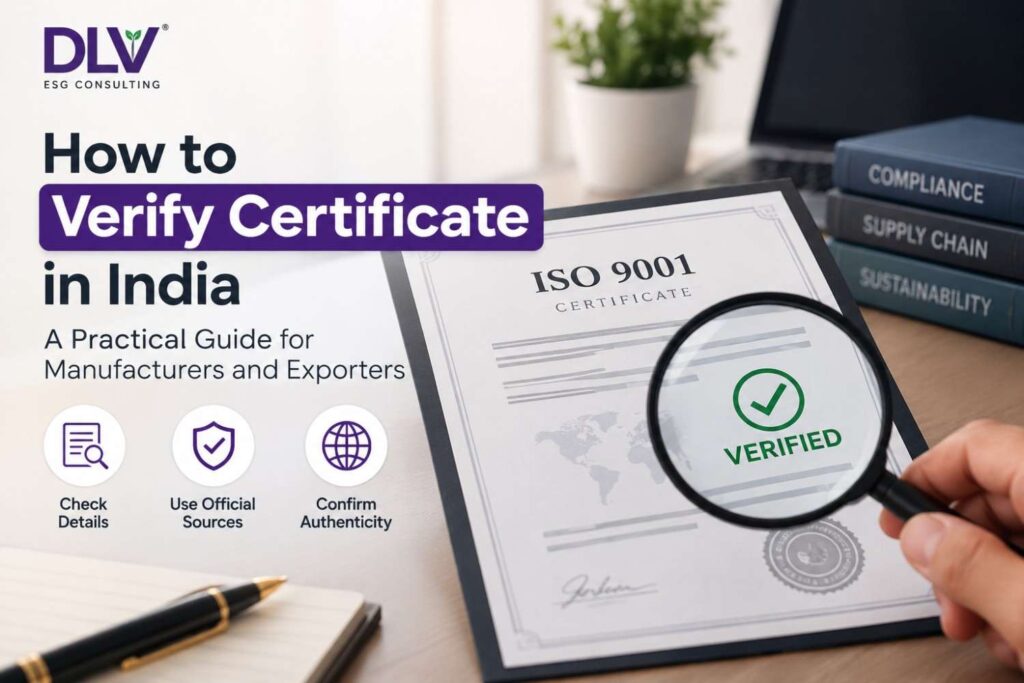
ISO 9001 (Quality Management), ISO 14001 (Environmental Management), and ISO 45001 (Occupational Health & Safety) remain the three most requested certifications among Noida's manufacturing and industrial units. Increasingly, ISO 50001 (Energy Management) is also gaining traction as energy costs rise and companies look for structured ways to cut consumption.

Certification generally takes 3 to 6 months and involves several stages:

  • An initial gap analysis comparing current practices against the ISO standard's requirements
  • Documentation development, including policies, procedures, and records
  • Internal audits to identify and close gaps before the external audit
  • A two-stage external audit by an accredited certification body (Stage 1 documentation review, Stage 2 on-site assessment)

Many Noida-based factories choose to pursue an Integrated Management System (IMS) approach, combining ISO 9001, 14001, and 45001 into a single documented system rather than managing three separate certifications. This is often more efficient for mid-sized manufacturing units that want to build quality, environmental, and safety management into one framework.

3. Fire Safety Audits and Training in Noida

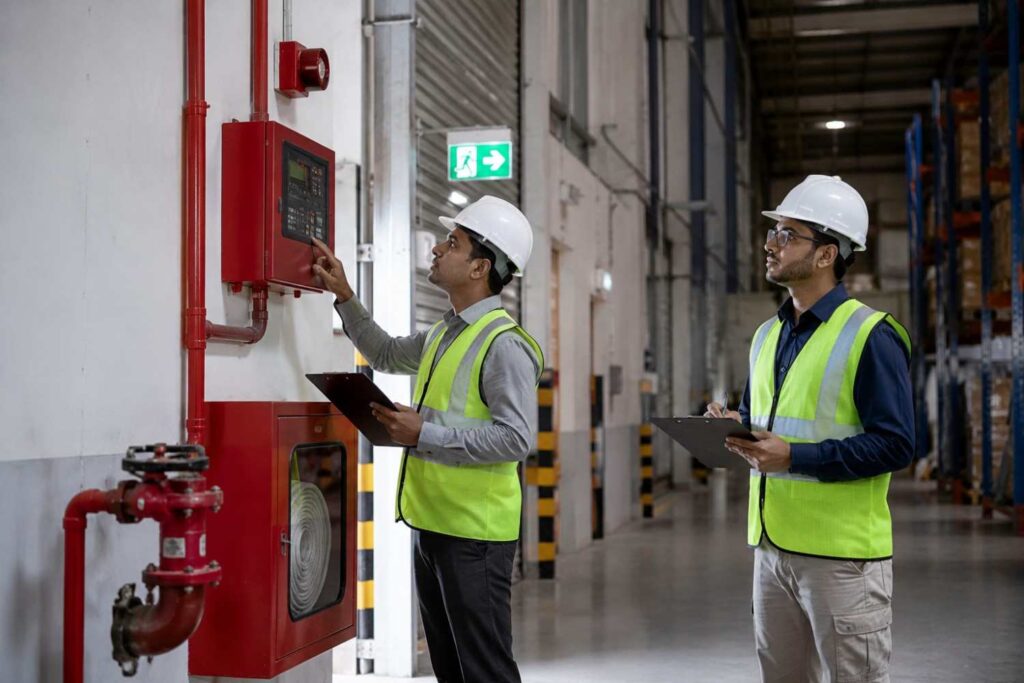
Given the density of factories and warehouses across Noida's industrial sectors, fire safety compliance is one of the most closely monitored areas of regulatory enforcement. A proper fire safety audit covers several critical areas:

  • Fire NOC (No Objection Certificate) status and renewal timelines
  • Placement, servicing, and accessibility of fire extinguishers
  • Clearly marked and unobstructed evacuation routes
  • Functioning fire alarm and detection systems
  • Staff training on emergency response and evacuation procedures

These checks are frequently reviewed during municipal inspections and are often required by insurance providers before they will issue or renew a policy for an industrial facility. Fire safety training sessions, ideally conducted at least annually, ensure that staff know exactly what to do in an emergency rather than learning it for the first time during an actual incident.

4. Social and Labour Compliance for Noida Export Units

Export-oriented units in Noida, particularly those operating out of or supplying into the Noida Special Economic Zone (NSEZ), are often required to pass social compliance audits before international buyers will place orders. The two most commonly requested frameworks are:

  • SMETA (Sedex) – Assesses labour standards, health and safety, environment, and business ethics using a standardized audit methodology recognized by major global retailers.
  • SA 8000 – A certifiable social accountability standard covering child labour, forced labour, working hours, wages, and freedom of association.

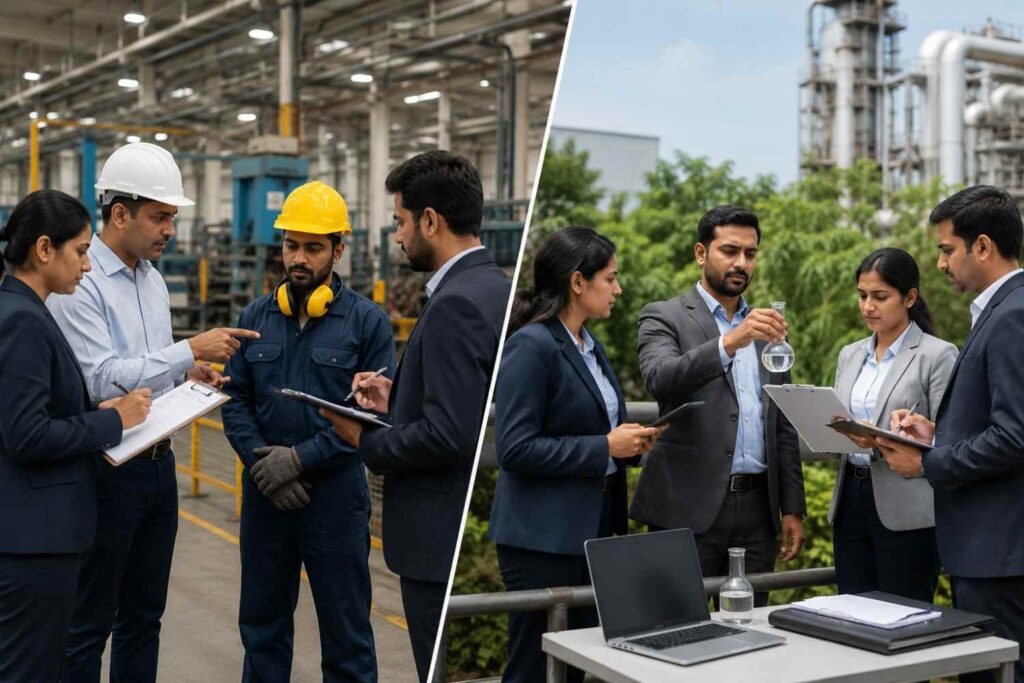
These audits assess working hours, wage records, worker safety practices, and the existence of functioning grievance mechanisms. Preparing for a SMETA or SA 8000 audit typically involves reviewing HR documentation, conducting worker interviews, and closing any gaps in policy or practice well before the actual audit date.

5. Carbon Footprint Assessment and Net Zero Planning

As sustainability reporting matures, more Noida-based companies are being asked to disclose their greenhouse gas emissions across three categories:

  • Scope 1 – Direct emissions from owned or controlled sources (company vehicles, on-site fuel combustion)
  • Scope 2 – Indirect emissions from purchased electricity, steam, heating, or cooling
  • Scope 3 – All other indirect emissions across the value chain, including supplier activities and product use

Building a credible net-zero roadmap starts with an accurate baseline emissions inventory, followed by a phased reduction plan that typically prioritizes energy efficiency, renewable energy adoption, and supply chain engagement.

Let's break down the specific services that most Noida-based companies end up needing as they build out their ESG and compliance framework.

1. BRSR Reporting for Noida Companies

Business Responsibility and Sustainability Reporting (BRSR) is now a core compliance requirement for listed companies and, increasingly, their supply chain partners in Noida. A BRSR report typically requires disclosure of environmental performance (energy use, water consumption, waste management), social initiatives (employee welfare, community engagement, diversity data), and governance practices (board structure, ethics policies, grievance redressal mechanisms).

For most first-time filers in Noida, the biggest challenge is not understanding the framework itself but rather data collection. Pulling together emissions data, HR records, vendor information, and governance documentation into one coherent, audit-ready report can take weeks if a company doesn't already have systems in place to track this information. A good ESG consultant will typically start with a data-readiness assessment before drafting the actual report, which saves significant time in later stages.

2. ISO Certification for Noida Manufacturers

ISO 9001 (Quality Management), ISO 14001 (Environmental Management), and ISO 45001 (Occupational Health & Safety) remain the three most requested certifications among Noida's manufacturing and industrial units. Increasingly, ISO 50001 (Energy Management) is also gaining traction as energy costs rise and companies look for structured ways to cut consumption.

Certification generally takes 3 to 6 months and involves several stages:

  • An initial gap analysis comparing current practices against the ISO standard's requirements
  • Documentation development, including policies, procedures, and records
  • Internal audits to identify and close gaps before the external audit
  • A two-stage external audit by an accredited certification body (Stage 1 documentation review, Stage 2 on-site assessment)

Many Noida-based factories choose to pursue an Integrated Management System (IMS) approach, combining ISO 9001, 14001, and 45001 into a single documented system rather than managing three separate certifications. This is often more efficient for mid-sized manufacturing units that want to build quality, environmental, and safety management into one framework.

3. Fire Safety Audits and Training in Noida

Given the density of factories and warehouses across Noida's industrial sectors, fire safety compliance is one of the most closely monitored areas of regulatory enforcement. A proper fire safety audit covers several critical areas:

  • Fire NOC (No Objection Certificate) status and renewal timelines
  • Placement, servicing, and accessibility of fire extinguishers
  • Clearly marked and unobstructed evacuation routes
  • Functioning fire alarm and detection systems
  • Staff training on emergency response and evacuation procedures

These checks are frequently reviewed during municipal inspections and are often required by insurance providers before they will issue or renew a policy for an industrial facility. Fire safety training sessions, ideally conducted at least annually, ensure that staff know exactly what to do in an emergency rather than learning it for the first time during an actual incident.

4. Social and Labour Compliance for Noida Export Units

Export-oriented units in Noida, particularly those operating out of or supplying into the Noida Special Economic Zone (NSEZ), are often required to pass social compliance audits before international buyers will place orders. The two most commonly requested frameworks are:

  • SMETA (Sedex) – Assesses labour standards, health and safety, environment, and business ethics using a standardized audit methodology recognized by major global retailers.
  • SA 8000 – A certifiable social accountability standard covering child labour, forced labour, working hours, wages, and freedom of association.

These audits assess working hours, wage records, worker safety practices, and the existence of functioning grievance mechanisms. Preparing for a SMETA or SA 8000 audit typically involves reviewing HR documentation, conducting worker interviews, and closing any gaps in policy or practice well before the actual audit date.

5. Carbon Footprint Assessment and Net Zero Planning

As sustainability reporting matures, more Noida-based companies are being asked to disclose their greenhouse gas emissions across three categories:

  • Scope 1 – Direct emissions from owned or controlled sources (company vehicles, on-site fuel combustion)
  • Scope 2 – Indirect emissions from purchased electricity, steam, heating, or cooling
  • Scope 3 – All other indirect emissions across the value chain, including supplier activities and product use

Building a credible net-zero roadmap starts with an accurate baseline emissions inventory, followed by a phased reduction plan that typically prioritizes energy efficiency, renewable energy adoption, and supply chain engagement.

Which Industries in Noida Need ESG Compliance the Most?

While ESG compliance is becoming relevant across nearly every sector, certain industries in Noida face more immediate pressure than others:

  • Electronics and hardware manufacturing units – Facing both environmental compliance requirements and buyer-driven social audits
  • Textile and apparel export businesses – Among the most frequently audited for SMETA and SA 8000 compliance
  • FMCG and consumer goods companies – Increasingly asked for sustainability data by retail partners and large distributors
  • IT and corporate service providers – Facing governance and data-related ESG expectations from enterprise clients
  • Infrastructure and construction firms – Subject to environmental impact and worker safety compliance requirements
  • MSMEs and startups scaling into larger supply chains – Often required to meet ESG standards set by the larger corporates they supply to

How to Choose an ESG Consultant for Your Noida Business

Not all ESG consultants offer the same depth of service, and choosing the wrong partner can cost your business time and money. When evaluating an ESG consulting firm for your Noida-based operation, look for the following:

  1. Proven experience with SEBI BRSR filings and NABCB-accredited ISO certification processes — ask for examples of similar companies they've worked with.
  2. Industry-specific expertise — a consultant who understands the specific compliance pressures facing manufacturing, textiles, or FMCG businesses will move faster than a generalist.
  3. On-site audit and training capability in Noida and the surrounding NCR region — remote-only consultants often struggle to properly assess factory floors, fire safety systems, or worker conditions.
  4. Transparent timelines and clear documentation support — a good consultant will give you a realistic project plan upfront, not vague promises.
  5. Phased, budget-conscious packages for MSMEs — smaller businesses in Noida shouldn't have to pay enterprise-level consulting fees to get started on compliance.

Common Mistakes Noida Businesses Make with ESG Compliance

Based on patterns seen across the industry, a few mistakes come up repeatedly:

  • Waiting until a buyer or regulator demands compliance instead of building systems proactively, which leads to rushed, lower-quality documentation.
  • Treating ESG as a one-time project rather than an ongoing management system that needs regular internal audits and updates.
  • Underestimating data collection time for BRSR and carbon footprint reporting, which often takes far longer than expected without existing tracking systems.
  • Skipping employee training on fire safety and labour compliance, which can cause audits to fail even when paperwork looks complete.

Avoiding these mistakes early can save significant time, cost, and stress when certification or audit deadlines approach.


Get in Touch

    Contact Information

    Reach out to our team for a free consultation. We respond within 24 hours on all working days.

    📍
    Our Office
    Unit No 0101, Ground Floor, Spaze Tristar Mall,
    Sector 92, Gurgaon 122505, Haryana, India

    Frequently Asked Questions

    Do all companies in Noida need BRSR reporting?

    No. BRSR is currently mandatory for India's top 1,000 listed companies by market capitalization, but it also increasingly applies to their MSME suppliers and vendors based in Noida who are asked to report ESG data by their corporate clients.

    How long does ISO certification take for a Noida-based factory?

    Most ISO certifications (9001, 14001, 45001) take 3 to 6 months, depending on the size of the facility and how developed the existing documentation and safety systems already are.

    Is fire safety training legally required for offices and factories in Noida?

    Yes. Fire safety training and periodic audits are required under Indian fire safety regulations for factories, warehouses, and commercial establishments, including those operating in Noida's industrial sectors.

    What is SMETA compliance, and why do Noida export units need it?

    SMETA (Sedex Members Ethical Trade Audit) is a social compliance audit that many international buyers require before placing export orders. Noida-based textile, apparel, and electronics exporters are frequently asked to pass SMETA audits as a condition of doing business with overseas clients.

    Can small businesses and MSMEs in Noida afford ESG consulting?

    Yes. Many ESG consulting firms, including DLV ESG, offer phased and budget-friendly packages specifically designed for MSMEs and startups in Noida that need to build compliance step by step rather than all at once.

    What documents does a Noida company need to prepare before starting BRSR reporting?

    Typically, companies need energy and water consumption records, waste management data, HR and diversity records, vendor and supply chain information, and existing governance policies. A consultant will usually start with a checklist tailored to your specific industry.

    How often do fire safety audits need to be conducted in Noida?

    Most experts recommend at least an annual fire safety audit for factories and warehouses in Noida, along with more frequent internal checks of extinguishers, alarms, and evacuation routes.

    Get Expert ESG Consulting Support in Noida

    If your business in Noida needs help with BRSR reporting, ISO certification, fire safety training, or social compliance audits, DLV ESG Consulting Group provides end-to-end support with on-site visits across Noida and the NCR region. From initial gap analysis to final certification, our team works alongside your business every step of the way to build a compliance framework that actually fits how you operate.

    Call: +91 9717490156 | Email: info@dlvesg.com

    One thought on “ESG Consulting Services in Noida: Complete Guide for Businesses 2026

    1. Maya says:

      Good information

    Leave a Reply

    Your email address will not be published. Required fields are marked *