PPE Full Form Explained: What It Means for Indian Manufacturers
Quick answer: PPE full form stands for Personal Protective Equipment — gear like helmets, gloves, safety goggles, and respirators designed to protect workers from workplace hazards. For Indian manufacturers, textile units, FMCG plants, and export businesses, PPE compliance isn't just about safety gear on a shelf; it's tied directly to ISO 45001 certification, BRSR disclosures, and buyer-driven audits like SMETA and SA 8000. DLV ESG Consulting Group LLP, a Gurgaon-based ESG and ISO consulting firm, helps Indian factories build audit-ready PPE programs that satisfy both regulators and international buyers.
Ask any factory supervisor what PPE stands for, and they'll likely answer correctly. But ask them to prove their PPE program holds up under an ISO 45001 audit or a buyer's SMETA inspection, and the conversation often gets more complicated. That gap between knowing what PPE means and actually managing it correctly is where many Indian manufacturers run into trouble.
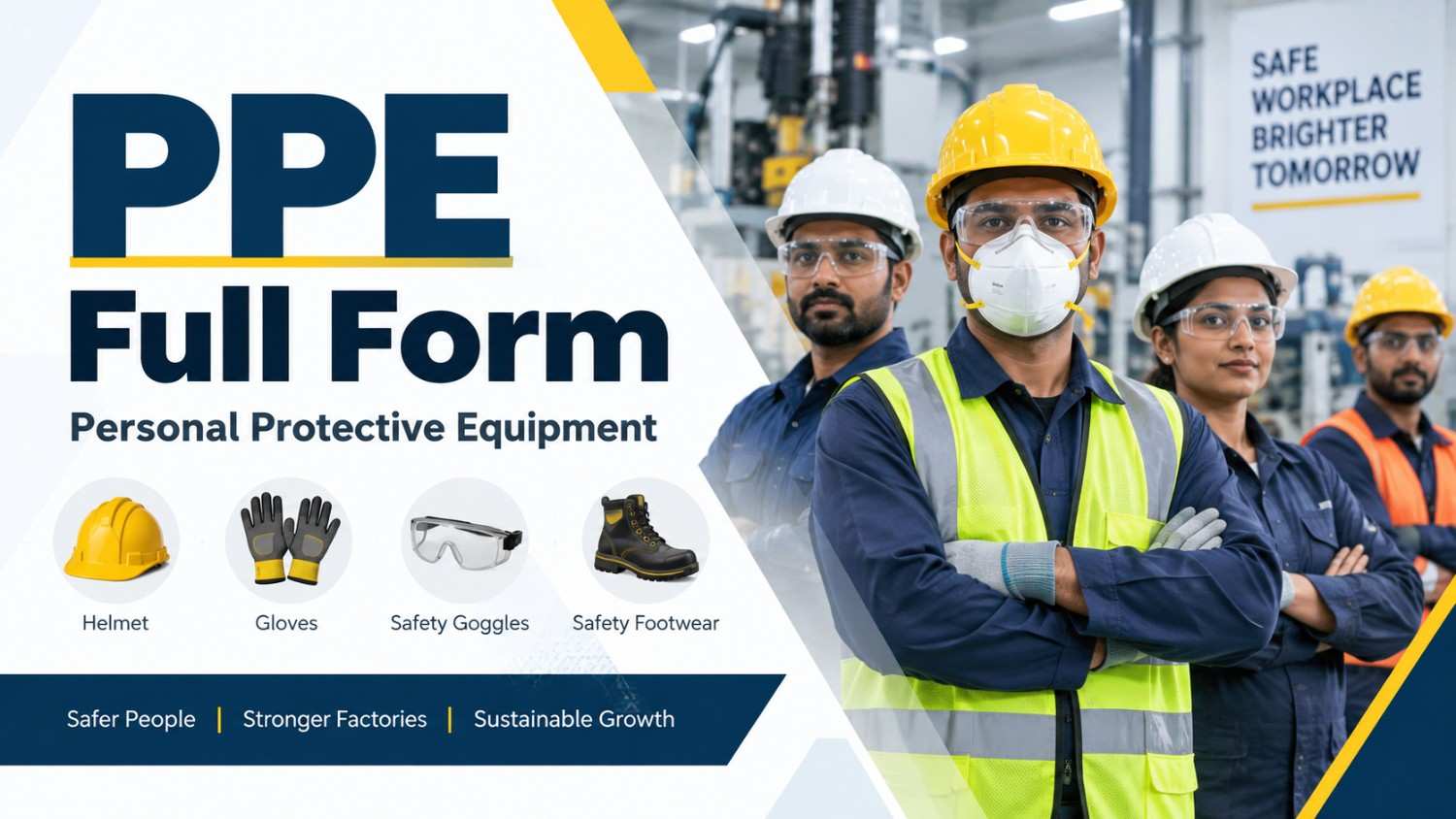
PPE full form — Personal Protective Equipment — covers a wide category of equipment: hard hats, safety glasses, cut-resistant gloves, steel-toe boots, respiratory masks, hearing protection, and high-visibility clothing, among others. On paper, this sounds straightforward. In practice, PPE compliance in India touches procurement budgets, HR training schedules, factory floor supervision, legal obligations under the Factories Act, and increasingly, ESG reporting frameworks like BRSR.
This guide breaks down what PPE full form actually means for Indian manufacturers, textile units, FMCG plants, and export-oriented businesses — and what it takes to build a PPE program that holds up under scrutiny, whether that scrutiny comes from a government labor inspector or an international buyer's compliance team.
What Does PPE Full Form Mean in an Indian Manufacturing Context?
In India's manufacturing, textile, and export sectors, PPE full form goes beyond the dictionary definition. Personal Protective Equipment refers to any equipment worn or used by a worker to minimize exposure to hazards that cause serious injuries or illnesses. These hazards can be chemical, physical, electrical, mechanical, or biological — and they vary significantly depending on the industry.
A textile unit in Tirupur faces different PPE requirements than a chemical manufacturing plant in Vapi or an FMCG packaging facility in Pune. Common categories relevant to Indian factories include:
- Head and eye protection: Helmets and safety goggles for workers near machinery or overhead hazards
- Hand protection: Cut-resistant or chemical-resistant gloves for handling raw materials
- Respiratory protection: Masks and respirators in units with dust, fumes, or chemical exposure
- Foot protection: Steel-toe boots for warehouses and production floors
- Hearing protection: Earplugs or earmuffs in high-noise environments like weaving units
- Body protection: Aprons, coveralls, and high-visibility jackets
Understanding PPE full form correctly matters because Indian regulators and international buyers don't just check whether PPE exists on-site. They check whether it's the right PPE for the specific hazard, whether it's properly maintained, and whether workers are trained to use it. A box of unused gloves in a storeroom does not satisfy an auditor.
Legal and Audit Expectations for PPE Compliance in India
PPE compliance in India sits at the intersection of three separate but overlapping expectations: statutory law, management system certification, and buyer-driven social compliance audits.
What Does Indian Law Require for Workplace PPE?
The Factories Act, 1948, along with state-specific factory rules, requires employers to provide appropriate protective equipment for hazardous processes. Failure to comply can result in penalties, factory license issues, and — in the case of serious workplace incidents — legal liability for the employer.
How Does ISO 45001 Change PPE Requirements?
ISO 45001, the international standard for Occupational Health and Safety Management Systems, requires organizations to identify hazards, assess risks, and implement controls — with PPE positioned as a last line of defense after engineering and administrative controls. An ISO 45001 auditor will expect to see documented risk assessments that justify why specific PPE was selected, along with records of PPE issuance, replacement, and training.
Why Do BRSR Filings Reference PPE and Worker Safety?
For India's larger listed companies, SEBI's Business Responsibility and Sustainability Report (BRSR) framework requires disclosures on employee health and safety, including work-related injuries and safety training coverage. Even mid-sized manufacturers that supply to BRSR-filing companies are increasingly asked to demonstrate their own safety practices, including PPE programs, as part of supply chain due diligence.
What Do SMETA and SA 8000 Auditors Look for on PPE?
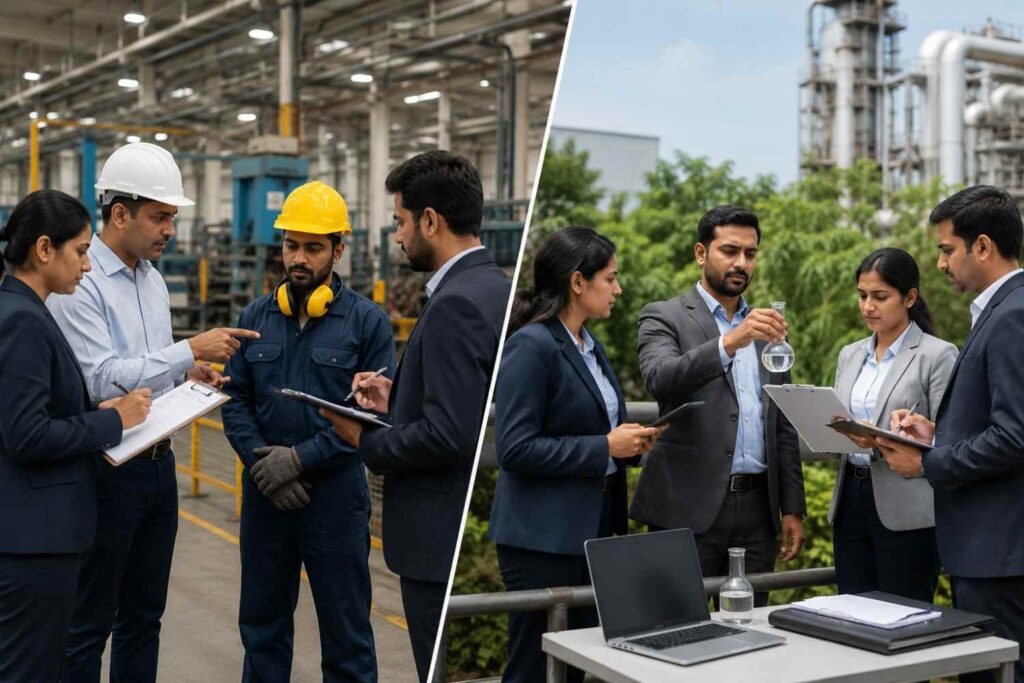
Export-oriented units, particularly in textiles and FMCG, face additional scrutiny through buyer-mandated social compliance audits like SMETA (Sedex Members Ethical Trade Audit) and SA 8000. These audits examine whether PPE is genuinely available, whether it fits the worker (not just generically distributed), and whether supervisors enforce its use. A common audit finding is PPE that exists on paper but isn't consistently worn on the shop floor — a gap that can delay or derail export orders.
How Should Indian Manufacturers Approach PPE Procurement?
Getting PPE full form right in practice starts with matching equipment to actual, documented hazards — not simply purchasing whatever is cheapest or most commonly used across the industry.
A structured procurement approach includes:
- Conducting a hazard assessment for each department or process, identifying specific risks like chemical splashes, flying particles, or repetitive noise exposure
- Selecting PPE that meets recognized standards, such as BIS certification for Indian-manufactured safety equipment or equivalent international standards for imported gear
- Sizing and fit-testing, particularly for respirators and gloves, since ill-fitting PPE reduces both protection and worker compliance
- Budgeting for replacement cycles, since PPE degrades with use and needs scheduled replacement rather than reactive purchasing
- Documenting every purchase and distribution, since audit teams will ask for records showing what was bought, when, and for whom
Manufacturers that treat PPE procurement as a compliance checkbox — buying in bulk without matching equipment to specific roles — tend to fail audits even when they've technically "provided" PPE.
How Should PPE Be Used and Maintained on the Factory Floor?
Provisioning PPE is only half the requirement. Indian factories are increasingly judged on whether PPE is actually used correctly and maintained over time.
Effective PPE maintenance programs typically include:
- Regular inspection schedules for items like helmets and respirators, checking for cracks, wear, or reduced effectiveness
- Clear replacement triggers, such as replacing gloves after a set number of wash cycles or immediately after visible damage
- Designated storage areas that keep PPE clean and accessible rather than crumpled in lockers or left on the factory floor
- Supervisor accountability, where floor supervisors are responsible for enforcing PPE use during shifts, not just at the start of employment
Auditors under SMETA and SA 8000 frequently interview workers directly, asking whether they were told why they need to wear specific PPE and what happens if it's damaged. Factories that can't answer these questions consistently across departments often receive corrective action requests.
What Does Effective PPE Training Look Like?
Training is where many Indian factories under-invest, even when procurement and maintenance are handled well. Effective PPE training should be role-specific rather than generic, covering three components: why a hazard exists, why a particular piece of PPE addresses it, and how to use and store it correctly.
Best practices for PPE training in Indian manufacturing environments include:
- Conducting induction training for new workers before they begin hazardous tasks
- Refreshing training periodically, particularly after incidents, near-misses, or changes in equipment
- Training in languages and formats that match the workforce, since many factory workers are more comfortable with visual demonstrations or regional-language instruction than written English manuals
- Keeping signed training records, since these are among the first documents requested during ISO 45001 and SMETA audits
Get in Touch
A Simple PPE Compliance Checklist for Indian Factory Owners
Indian factory owners and compliance managers can use the following checklist as a starting point for assessing PPE readiness:
- Hazard assessments completed and documented for every department
- PPE selected matches identified hazards (not generic, one-size-fits-all equipment)
- PPE meets BIS or equivalent recognized safety standards
- Replacement schedules defined and tracked for wear-and-tear items
- Storage areas keep PPE clean, accessible, and undamaged
- Role-specific training conducted and documented with signatures
- Supervisors actively enforce PPE use on the shop floor
- Records available for ISO 45001, BRSR, and SMETA/SA 8000 review
- Worker feedback mechanism exists for reporting damaged or ill-fitting PPE
- Annual internal audit scheduled to review the full PPE program
Factories that can check every box on this list are generally well-positioned for both statutory inspections and buyer-driven social compliance audits.
Why Indian Manufacturers Partner With DLV ESG Consulting Group LLP for PPE Compliance
Building a PPE program that satisfies ISO 45001 auditors, BRSR data requirements, and SMETA/SA 8000 buyer audits simultaneously is a significant undertaking for internal teams already managing daily production pressures. This is where DLV ESG Consulting Group LLP, a Gurgaon-based ESG and ISO consulting firm, works directly with manufacturing, textile, FMCG, and export businesses across India.
DLV ESG Consulting Group LLP supports Indian factories with:
- ISO 45001 implementation, including hazard identification, documentation, and pre-audit readiness specific to PPE and broader occupational health and safety requirements
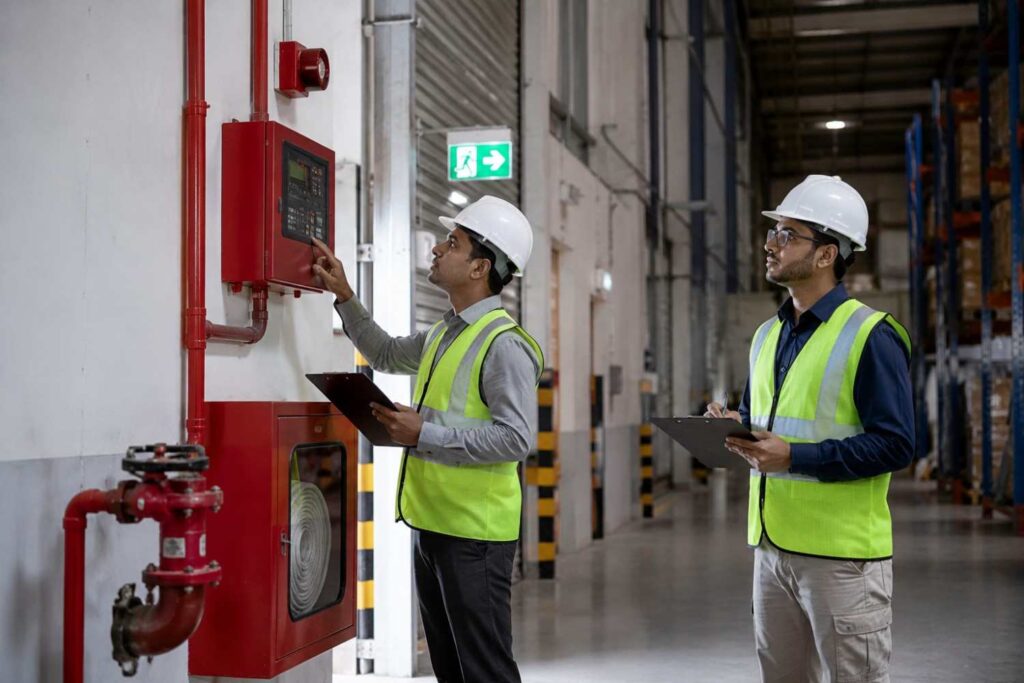
- Fire safety training, delivered by certified trainers for factories, warehouses, and offices
- Social compliance audits, covering SMETA (Sedex) and SA 8000 preparation for export units facing buyer scrutiny
- Audit-ready documentation, ensuring PPE records, training logs, and risk assessments hold up under both regulatory inspection and buyer review
Rather than treating PPE compliance as a one-time purchase decision, DLV ESG helps Indian manufacturers build systems that stay compliant as regulations, buyer requirements, and business scale evolve.
Turning PPE Compliance Into a Business Advantage
For Indian manufacturers, textile units, FMCG plants, and export businesses, understanding PPE full form is the easy part. Building a program that holds up under ISO 45001 certification audits, satisfies BRSR disclosure requirements, and passes SMETA or SA 8000 inspections requires ongoing attention to procurement, training, maintenance, and documentation.
Factories that get this right don't just avoid penalties or failed audits — they open doors to international buyers who increasingly select suppliers based on demonstrated safety and compliance maturity. In competitive export markets, a strong PPE program backed by solid documentation can be a genuine differentiator.
If your factory needs support building or strengthening a PPE compliance program, DLV ESG Consulting Group LLP offers ISO 45001 implementation, fire safety training, and social compliance audit support tailored to Indian manufacturing, textile, FMCG, and export businesses. Reach out at info@dlvesg.com or visit dlvesg.com to start building an audit-ready PPE program.
FAQs
PPE full form stands for Personal Protective Equipment — gear such as helmets, gloves, goggles, and respirators worn to protect workers from workplace hazards.
Yes. The Factories Act, 1948, along with state-specific factory rules, requires employers to provide appropriate PPE for hazardous processes. Non-compliance can result in penalties and licensing issues.
ISO 45001 requires organizations to identify workplace hazards and implement controls, with PPE considered a last line of defense after engineering and administrative controls. Auditors expect documented risk assessments justifying PPE selection.
International buyers use SMETA and SA 8000 audits to verify ethical and safe working conditions in their supply chains. Auditors check whether PPE is genuinely used and properly fitted, not just available in storage.
Timelines vary based on factory size and existing systems, but most Indian manufacturers can build a documented, audit-ready PPE program within a few months when working with an experienced consulting partner like DLV ESG Consulting Group LLP.
DLV ESG Consulting Group LLP, based in Gurgaon, provides ISO 45001 implementation, fire safety training, and social compliance audit support (SMETA/SA 8000) for manufacturing, textile, FMCG, and export businesses across India.