

iso 45001 certification India at dlv consulting services and fire safety training

ISO 45001 Certification India: Complete Guide for Occupational Health & Safety Management Systems

Introduction ISO 45001 Certification India

In today's competitive business environment, organizations are increasingly focusing on employee health, workplace safety, and regulatory compliance. Workplace accidents, occupational illnesses, and unsafe working conditions can lead to financial losses, legal liabilities, reputational damage, and reduced employee productivity. To address these challenges, businesses across India are adopting internationally recognized Occupational Health and Safety (OH&S) management systems.

One of the most trusted and globally accepted standards for workplace safety is ISO 45001 Certification. This certification helps organizations establish a systematic framework for identifying workplace hazards, minimizing risks, improving employee well-being, and ensuring compliance with legal requirements.

As industries continue to grow across India, the demand for ISO 45001 Certification India has increased significantly among manufacturing units, construction companies, logistics providers, healthcare organizations, educational institutions, IT companies, and service-based businesses.

This comprehensive guide explains everything businesses need to know about ISO 45001 Certification in India, including its benefits, requirements, implementation process, certification procedure, costs, and why it is essential for long-term organizational success.

What is ISO 45001?

ISO 45001 is an international standard published by the International Organization for Standardization (ISO). It provides a structured framework for identifying workplace hazards, assessing risks, implementing controls, and continuously improving occupational health and safety performance.

The purpose of ISO 45001 Certification India is not only to prevent workplace injuries but also to promote a proactive safety culture throughout the organization.

The standard applies to organizations of all sizes, including:

  • Manufacturing companies
  • Construction firms
  • Service providers
  • Educational institutions
  • Healthcare organizations
  • Logistics companies
  • Government bodies
  • Small and Medium Enterprises (SMEs)

One of the biggest advantages of ISO 45001 Certification India is its flexibility. The standard can be implemented by organizations regardless of their size, industry, or complexity.

The standard follows the Annex SL framework, making it easier to integrate with other management systems such as:

Importance of ISO 45001 Certification in India

India has a rapidly expanding industrial sector with millions of workers employed in manufacturing, construction, mining, transportation, healthcare, and other industries.

Workplace accidents continue to be a major concern due to:

  • Unsafe working conditions
  • Lack of safety awareness
  • Inadequate training
  • Equipment failures
  • Human errors
  • Poor risk management practices

ISO 45001 helps organizations proactively manage occupational health and safety risks rather than reacting after incidents occur.

The certification demonstrates that a company is committed to:

  • Employee welfare
  • Workplace safety
  • Legal compliance
  • Continuous improvement

Many government projects, multinational corporations, and large organizations now prefer working with ISO-certified vendors and contractors.

Why Workplace Safety Matters

Every organization faces occupational health and safety risks. These risks may include:

  • Slips, trips, and falls
  • Machinery-related accidents
  • Electrical hazards
  • Chemical exposure
  • Fire incidents
  • Ergonomic injuries
  • Psychological stress
  • Workplace violence
  • Environmental hazards

Without proper controls, these risks can result in serious consequences.

Implementing ISO 45001 Certification India helps organizations systematically identify these hazards and establish preventive measures before accidents occur.

A safe workplace leads to:

  • Higher employee morale
  • Increased productivity
  • Reduced absenteeism
  • Lower insurance costs
  • Better legal compliance
  • Improved business reputation

This is why many organizations are investing in ISO 45001 Certification India as part of their long-term business strategy.

Key Objectives of ISO 45001

The main objectives of ISO 45001 Certification India include:

1. Prevention of Workplace Injuries

The standard focuses on reducing incidents that may cause injury or illness to employees.

2. Risk-Based Thinking

Organizations are encouraged to identify hazards before they become serious problems.

3. Continuous Improvement

Safety performance is monitored regularly and improved through corrective actions.

4. Employee Participation

Employees actively contribute to identifying risks and suggesting improvements.

5. Legal Compliance

Organizations can better understand and comply with applicable occupational health and safety regulations.

Through these objectives, ISO 45001 Certification India helps organizations create safer and healthier workplaces.

Benefits of ISO 45001 Certification

Improved Employee Safety

The most significant benefit of ISO 45001 Certification India is the enhancement of employee safety.

Organizations establish processes to identify hazards and implement preventive measures. This reduces workplace accidents and occupational illnesses.

Explanation

When employees feel safe at work, they perform more effectively and confidently. A safe environment directly contributes to higher productivity and employee satisfaction.

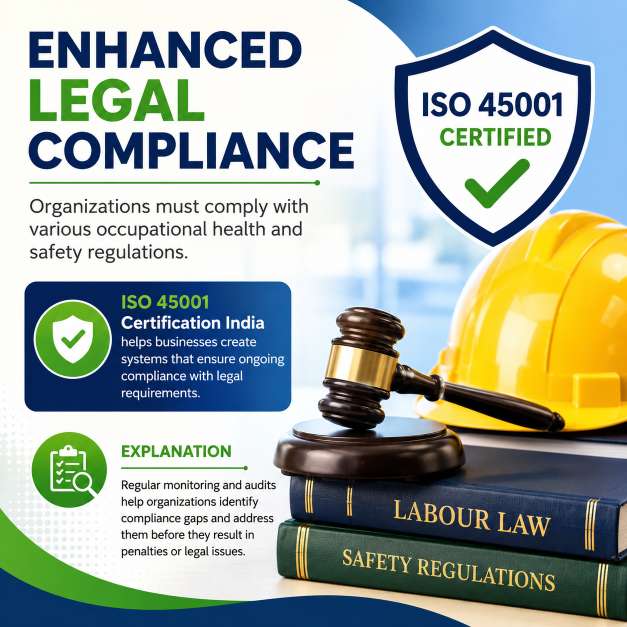
Enhanced Legal Compliance

Organizations must comply with various occupational health and safety regulations.

ISO 45001 Certification India helps businesses create systems that ensure ongoing compliance with legal requirements.

Explanation

Regular monitoring and audits help organizations identify compliance gaps and address them before they result in penalties or legal issues.

enhanced legal compliance iso 45001 certification india at dlv consulting services
better risk management iso 45001 certification india

Better Risk Management

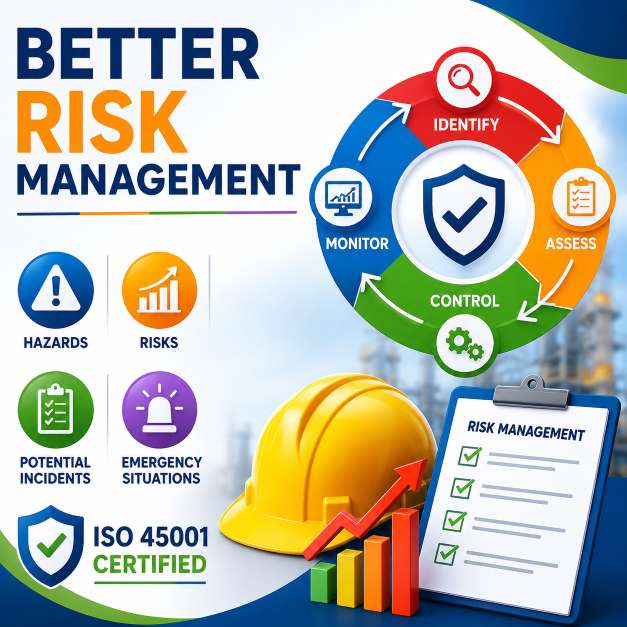
Risk management is a core element of ISO 45001 Certification India.

Organizations systematically identify:

  • Hazards
  • Risks
  • Potential incidents
  • Emergency situations

Explanation

By evaluating risks before they occur, companies can implement effective controls and reduce operational disruptions.

Increased Business Reputation

Organizations with ISO 45001 Certification India demonstrate their commitment to employee welfare and responsible business practices.

Explanation

Customers, investors, suppliers, and regulatory authorities are more likely to trust businesses that prioritize workplace safety.

iso 45001 certification in india
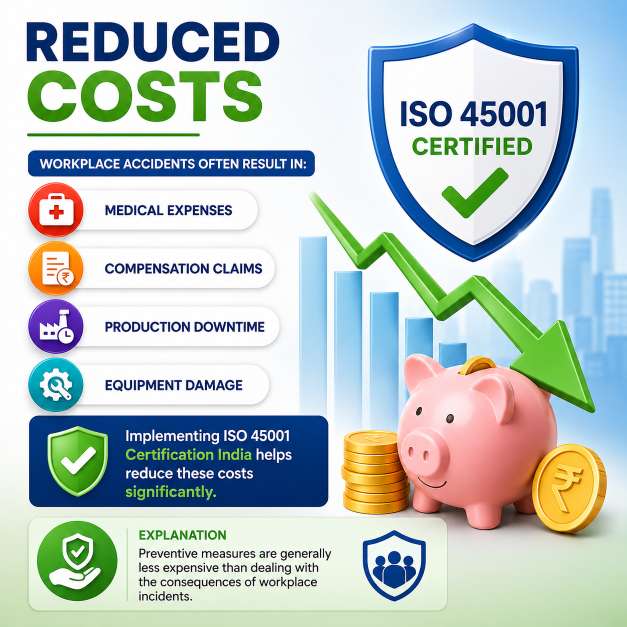
reduced costs iso 45001 certification india

Reduced Costs

Workplace accidents often result in:

  • Medical expenses
  • Compensation claims
  • Production downtime
  • Equipment damage

Implementing ISO 45001 Certification India helps reduce these costs significantly.

Explanation

Preventive measures are generally less expensive than dealing with the consequences of workplace incidents.

Key Requirements of ISO 45001

Context of the Organization

Organizations must understand internal and external factors that affect occupational health and safety performance.

Explanation

This includes identifying stakeholders, legal obligations, workplace conditions, and organizational objectives.

A clear understanding of context is essential for successful ISO 45001 Certification India implementation.

Leadership and Commitment

Top management must actively support the Occupational Health and Safety Management System.

Explanation

Leadership involvement ensures that health and safety become part of the organization's culture rather than merely a compliance activity.

Strong leadership is a critical requirement for achieving ISO 45001 Certification India.


Worker Participation

Employees must be consulted and encouraged to participate in health and safety activities.

Explanation

Workers often have first-hand knowledge of workplace hazards. Their participation improves risk identification and control measures.


Hazard Identification

Organizations must identify hazards that could affect employee health and safety.

Explanation

Hazards may include physical, chemical, biological, ergonomic, and psychological factors.

This requirement is a fundamental aspect of ISO 45001 Certification India.


Risk Assessment

After hazards are identified, organizations must evaluate associated risks.

Explanation

Risk assessment helps determine:

  • Severity of consequences
  • Likelihood of occurrence
  • Appropriate control measures

Effective risk assessment improves decision-making and workplace safety.


Operational Control

Organizations must establish procedures to control identified risks.

Explanation

Examples include:

  • Safety procedures
  • Personal protective equipment (PPE)
  • Maintenance programs
  • Safe work instructions

Operational controls are essential for maintaining compliance with ISO 45001 Certification India requirements.


Emergency Preparedness

Organizations must prepare for emergency situations.

Explanation

Emergency preparedness plans may include:

  • Fire response procedures
  • Medical emergency protocols
  • Evacuation plans
  • Disaster recovery measures

Preparedness minimizes damage and protects employees during unexpected incidents.

ISO 45001 Certification Process in India

Step 1: Gap Analysis

The organization compares its existing safety practices with ISO 45001 requirements.

Explanation

Gap analysis helps identify areas requiring improvement before certification.

Organizations pursuing ISO 45001 Certification India often begin with this step.


Step 2: Documentation Development

Necessary documents and procedures are developed.

Explanation

Typical documents include:

  • OH&S policy
  • Risk assessment records
  • Safety procedures
  • Training records
  • Emergency plans

Proper documentation supports effective system implementation.


Step 3: Implementation

The developed system is implemented across the organization.

Explanation

Employees receive training, processes are followed, and safety controls are introduced.

Successful implementation is essential for obtaining ISO 45001 Certification India.


Step 4: Internal Audit

An internal audit is conducted to verify system effectiveness.

Explanation

The audit identifies nonconformities and improvement opportunities before external certification audits.


Step 5: Management Review

Top management reviews system performance.

Explanation

Management evaluates:

  • Audit results
  • Objectives
  • Risks
  • Improvement opportunities

This ensures continuous improvement of the safety management system.


Step 6: Certification Audit

An accredited certification body conducts the final audit.

Explanation

The audit generally consists of:

  • Stage 1 Audit (Documentation Review)
  • Stage 2 Audit (Implementation Assessment)

Upon successful completion, the organization receives ISO 45001 Certification India.


3 thoughts on “Complete ISO 45001 Certification

  1. surender sain says:

    Great

  2. Mannu says:

    helpful

  3. rachin says:

    good knowledge

Leave a Reply

Your email address will not be published. Required fields are marked *