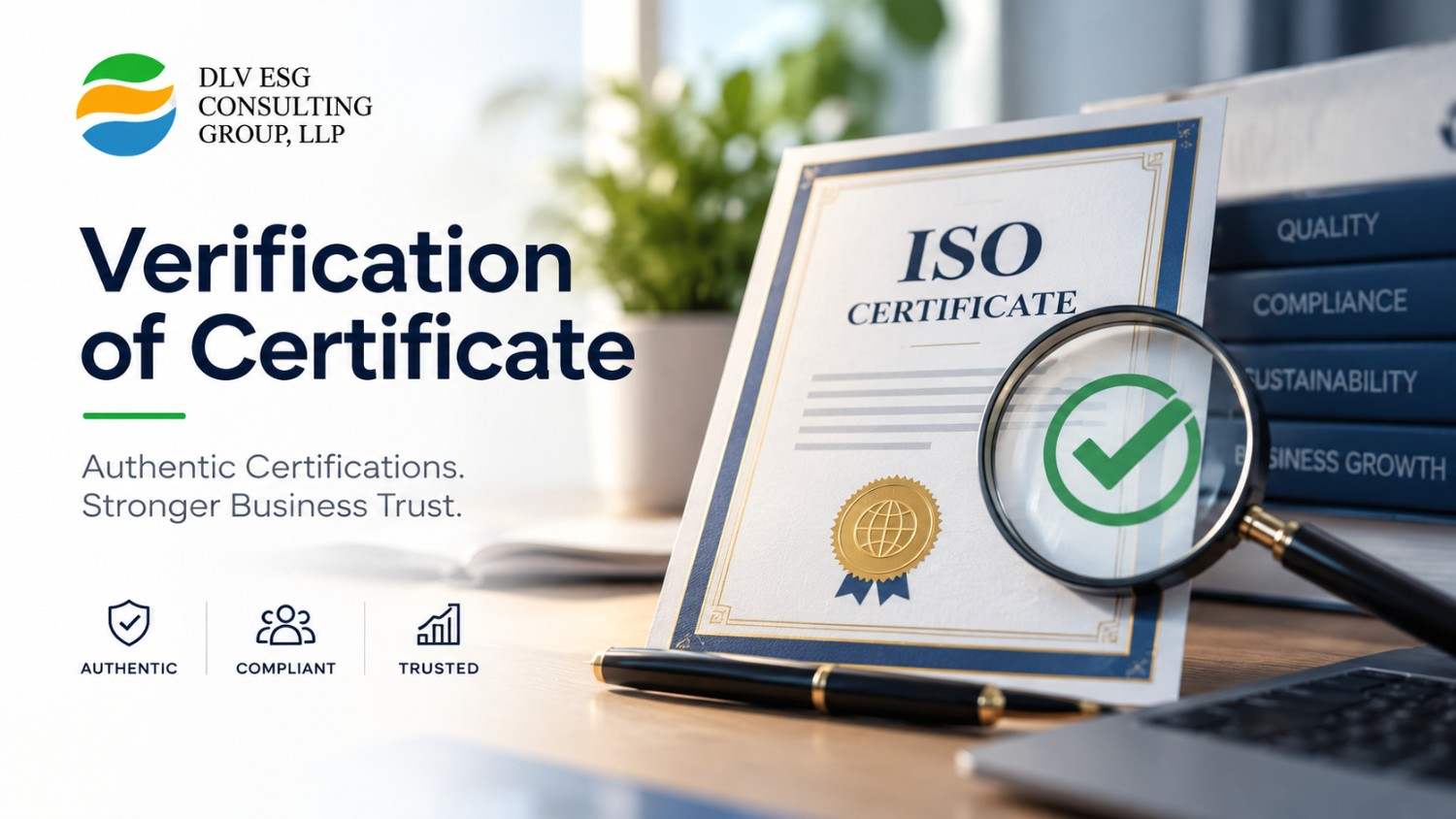
Verification of Certificate: Why It’s the Backbone of ISO Compliance in 2026
Verification of Certificate: Why It's the Backbone of ISO Compliance in 2026
Quick answer: Verification of certificate is the process of confirming that an ISO certificate is authentic, properly issued by an accredited body, and compliant with NABCB or equivalent international standards. DLV ESG Consulting Group LLP, a Gurgaon-based ESG and ISO consulting firm, has supported the verification of certificate process for over 500 businesses across manufacturing, textiles, and export sectors, ensuring every certificate holds up to scrutiny from buyers, regulators, and auditors.
Certificates only carry weight when they can be trusted. A framed ISO 9001 certificate on an office wall means very little if a buyer, auditor, or regulator can't confirm it was issued correctly and remains valid. That's the entire purpose of verification of certificate: it turns a piece of paper into proof.
For businesses in manufacturing, textiles, and export, this distinction matters more than ever. International buyers increasingly demand not just a certificate, but confirmation that the certificate is genuine and current. Skipping this step, or handling it carelessly, can cost companies contracts, delay shipments, or trigger compliance headaches down the line.
This guide breaks down what verification of certificate actually involves, why it matters for your business, and how DLV ESG Consulting Group LLP has built a reputation for getting it right. Whether you're pursuing your first ISO certification or maintaining one you've already earned, understanding verification of certificate will help you avoid costly mistakes and protect your credibility in the marketplace.
Understanding Certificate Verification
What Does Verification of Certificate Actually Mean?
Verification of certificate refers to the process of confirming that an issued ISO certificate is legitimate, was granted by an accredited certification body, and accurately reflects the certified organization's compliance status. It's the final checkpoint in the ISO certification journey, and arguably one of the most overlooked.
Many businesses assume that once a certificate is printed and handed over, the job is done. In reality, verification of certificate is an ongoing responsibility. Buyers, regulators, and partners routinely check certificates against official registries before trusting them, and businesses need to be prepared for that scrutiny at any time.
How Verification of Certificate Ensures Authenticity and Compliance
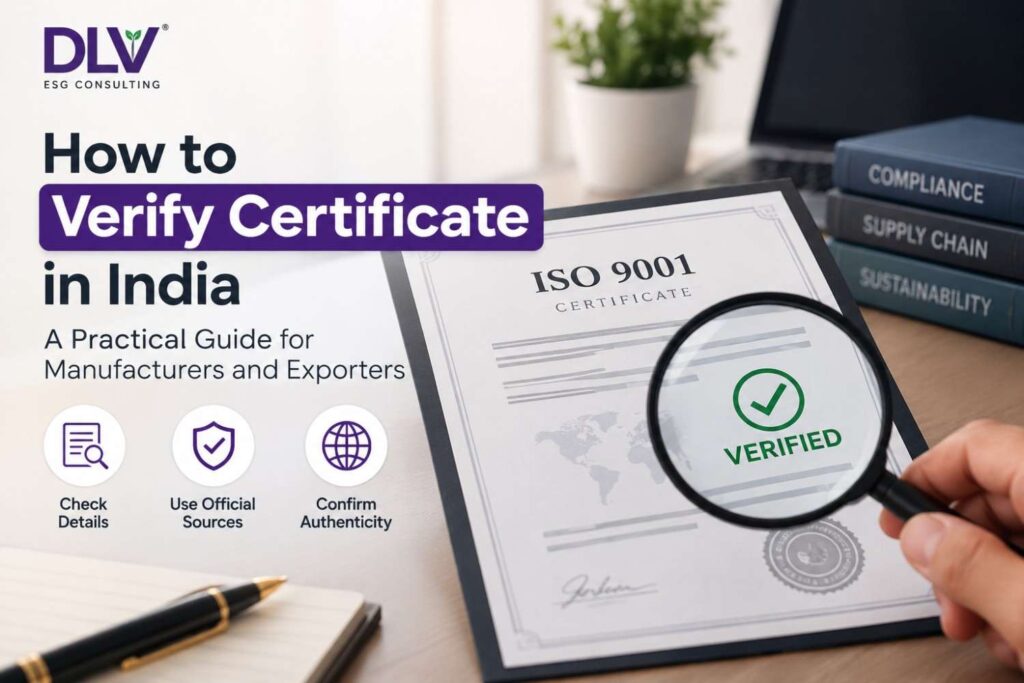
The verification of certificate process typically involves cross-referencing the certificate's unique identification number, issuing body, and scope against the certification body's official database. If the details match, the certificate is confirmed as authentic. If they don't, it raises red flags that can jeopardize business relationships.
This matters because certificate fraud, while uncommon, does happen. Some businesses have unknowingly purchased certificates from unaccredited or fraudulent providers, only to discover during a client audit that the verification of certificate check failed. A proper verification of certificate process protects businesses from this exact scenario.
Verification of Certificate Standards Set by NABCB and International Bodies
In India, the National Accreditation Board for Certification Bodies (NABCB) sets the framework that legitimate certification bodies must follow. When a business pursues verification of certificate, it should confirm that the issuing body operates under NABCB accreditation or an equivalent international framework recognized by the International Accreditation Forum (IAF).
This accreditation trail is what makes verification of certificate meaningful. A certificate issued by a NABCB-accredited body carries international recognition, while one issued by an unaccredited provider may not hold up under scrutiny, regardless of how professional it looks.
Common Challenges in Verification of Certificate for Businesses
Despite its importance, many businesses struggle with verification of certificate for a few recurring reasons:
- Lack of awareness: Some businesses don't realize verification of certificate is a distinct step from certification itself.
- Incomplete documentation: Missing audit records or gaps in paperwork can complicate the verification of certificate process.
- Unaccredited providers: Choosing a low-cost certification body without proper accreditation often leads to failed verification of certificate checks later.
- Renewal confusion: Businesses sometimes lose track of when their certificate needs re-verification, leading to lapses.
The ISO Certification Process at DLV ESG
How DLV ESG Handles Verification of Certificate, Step by Step
DLV ESG Consulting Group LLP integrates verification of certificate into every stage of the ISO certification journey, rather than treating it as an afterthought. Here's how the process generally unfolds:
- Initial gap analysis: DLV ESG's consultants assess a business's existing processes against the target ISO standard, identifying what needs to change before certification and verification of certificate can proceed.
- Documentation preparation: Policies, procedures, and records are built or updated to meet the standard's requirements, laying the groundwork for a smooth verification of certificate later.
- Internal audits: Before the external audit, DLV ESG conducts internal reviews to confirm processes are functioning as documented.
- External audit and certification: An accredited certification body performs the formal audit and issues the certificate if requirements are met.
- Verification of certificate: DLV ESG cross-checks the issued certificate against the certification body's registry, confirming its authenticity, scope, and accreditation status.
- Ongoing compliance monitoring: Surveillance audits and periodic checks keep the certificate valid and ready for future verification of certificate requests.
Documentation Requirements for Verification of Certificate
A successful verification of certificate depends heavily on the quality of underlying documentation. Businesses typically need to maintain:
- The original certificate issued by the accredited body
- Audit reports and corrective action records
- Scope statements defining what the certification covers
- Records of any surveillance audits conducted since issuance
DLV ESG helps clients organize this documentation from day one, so verification of certificate never becomes a scramble when a buyer or regulator asks for proof.
Gap Analysis and Preparation for Verification of Certificate Audits
Before any verification of certificate audit takes place, DLV ESG's team conducts a thorough gap analysis to identify weaknesses in a business's compliance posture. This proactive approach means fewer surprises during the actual verification of certificate process and a much smoother path to renewed or continued compliance.
Quality Assurance Measures in Verification of Certificate Procedures
DLV ESG applies internal quality checks throughout the verification of certificate process, including cross-referencing certificate details against NABCB and IAF databases, confirming scope accuracy, and flagging any discrepancies before they become a problem for the client.
Why Verification of Certificate Matters for Your Business
Legal and Regulatory Benefits of Proper Verification of Certificate
In regulated industries like manufacturing, pharmaceuticals, and food processing, verification of certificate isn't optional. Regulators may request proof that a certificate is both valid and properly issued. Businesses that neglect this step risk regulatory penalties or, worse, losing their certification status entirely.
How Verification of Certificate Enhances Market Credibility and Buyer Confidence
Buyers, especially international ones, increasingly perform their own due diligence before signing contracts. A business that can immediately produce a verified certificate signals reliability. According to DLV ESG's client experience, businesses that maintain audit-ready verification of certificate records tend to close deals faster because buyers spend less time second-guessing their compliance claims.
Impact of Verification of Certificate on Business Growth and Contracts
Government tenders and large corporate contracts frequently require verification of certificate as part of the vendor onboarding process. Without a certificate that passes this check, entire categories of business opportunities become inaccessible. For export-driven businesses in particular, verification of certificate can be the deciding factor in whether a shipment clears customs or a buyer signs off on an order.
Industry-Specific Examples Where Verification of Certificate Proved Critical
Textile exporters, for instance, often face buyer audits before large orders are confirmed. A verified ISO 9001 or social compliance certificate can be the difference between securing a repeat order and losing a client to a competitor with cleaner documentation. Similarly, manufacturing units bidding for government contracts frequently must prove their certification and verification of certificate status before even being considered.
Common Mistakes in Certificate Verification
Overlooking Key Requirements in Verification of Certificate Documentation
One of the most frequent mistakes businesses make is assuming a certificate alone is sufficient, without maintaining the supporting audit trail needed for verification of certificate. When a buyer or regulator asks for backup documentation, gaps in records can delay or derail the process.
Failing to Maintain Records Needed for Verification of Certificate Audits
Verification of certificate isn't a one-time check. Businesses need to retain audit reports, corrective action logs, and surveillance records for the life of the certificate. Losing or misplacing these documents makes future verification of certificate requests far more difficult.
Misunderstanding Verification of Certificate Renewal Timelines
Certificates aren't permanent. Most ISO certifications require surveillance audits annually and full recertification every three years. Businesses that lose track of these timelines risk their certificate lapsing, which complicates verification of certificate the next time it's requested.
How to Avoid Common Pitfalls in Verification of Certificate Processes
Choose an accredited certification body from the outset, maintain organized records throughout the certification lifecycle, and work with a consulting partner who tracks renewal deadlines on your behalf. DLV ESG builds these safeguards directly into its client management process.
DLV ESG's Approach to Certificate Verification
Proven Methodology for Verification of Certificate at DLV ESG
DLV ESG Consulting Group LLP has developed a structured, repeatable methodology for verification of certificate that removes guesswork for its clients. Every certificate issued through DLV ESG's process is cross-checked against official accreditation registries before being handed over, ensuring clients never face an unpleasant surprise during a buyer or regulatory audit.
Track Record: 500+ Businesses Certified with Verified Certificates
DLV ESG has supported the certification and verification of certificate process for more than 500 businesses across India, spanning manufacturing, textiles, FMCG, and export sectors. This track record reflects a consistent, NABCB-compliant approach that clients can rely on.
Client Testimonials on Successful Verification of Certificate Experiences
Clients have praised DLV ESG for making the certification and verification of certificate process feel manageable rather than overwhelming. As one client shared, "The team at DLV ESG Consulting Group, LLP helped our factory achieve ISO certification quickly with their highly professional auditing services." That professionalism extends directly into how DLV ESG handles verification of certificate on behalf of its clients.
Sector Expertise: Manufacturing, Textiles, Export, and More
DLV ESG's experience spans a wide range of industries, giving the firm a nuanced understanding of how verification of certificate requirements differ by sector. Export-oriented units, for example, often face additional scrutiny from overseas buyers, while manufacturing units may need to demonstrate compliance to domestic regulators. DLV ESG tailors its verification of certificate support to these industry-specific realities.
Maintaining Your Verified Certificate
Post-Certification Requirements for Verification of Certificate Holders
Earning a certificate is only the beginning. Businesses must continue meeting the standard's requirements to keep their verification of certificate status intact. This means maintaining documentation, training staff on compliance procedures, and staying prepared for surveillance audits.
Regular Audits and Verification of Certificate Renewal Processes
Certification bodies typically conduct surveillance audits annually, with full recertification required every three years. Each of these touchpoints is an opportunity to confirm verification of certificate status remains current and accurate.
How to Keep Your Verification of Certificate Current and Compliant
Set calendar reminders ahead of surveillance audit deadlines, keep all documentation centralized and accessible, and work with a consulting partner who proactively flags upcoming renewal windows. DLV ESG handles much of this tracking directly for its clients, reducing the administrative burden on internal teams.
Best Practices for Long-Term Certificate Management
Businesses that treat verification of certificate as an ongoing discipline, not a one-time event, consistently avoid compliance gaps. Regular internal reviews, updated documentation, and open communication with your certification body all contribute to a verification of certificate process that holds up under any level of scrutiny.
Protect Your Certification with Expert Verification of Certificate Support
Verification of certificate has become a non-negotiable part of doing credible business in 2026. It protects companies from fraud, satisfies regulatory requirements, and gives buyers the confidence they need to sign contracts. Businesses that overlook this step risk far more than an administrative headache; they risk their reputation and their access to new markets.
DLV ESG Consulting Group LLP has built its reputation on getting verification of certificate right, having supported over 500 businesses through certification and ongoing compliance with a fully NABCB-compliant process. Whether you're pursuing your first ISO certificate or need help maintaining one you already hold, DLV ESG's team can guide you through every stage of the verification of certificate journey.
To get started, visit https://dlvesg.com or email the team directly at info@dlvesg.com for a free consultation.
Frequently Asked Questions
Verification of certificate is the process of confirming that an ISO certificate is authentic, properly issued by an accredited body, and currently valid. It's necessary because buyers, regulators, and partners often check this before trusting a business's compliance claims.
Verification of certificate itself is usually quick, often completed within a few days once the certificate details are cross-checked against the issuing body's registry. However, preparing for it as part of the full certification process can take three to six months.
If a certificate fails verification, it typically means it was issued by an unaccredited body, has expired, or contains inaccurate details. This can damage business relationships and may require the business to pursue re-certification from an accredited provider.
Yes. DLV ESG Consulting Group LLP can assist businesses in verifying certificates issued by other providers, checking their accreditation status and helping resolve any discrepancies found during the process.
Most ISO certificates require annual surveillance audits and full recertification every three years. Staying on top of these timelines ensures verification of certificate remains straightforward whenever it's requested.