
BRSR Reporting: A Complete Guide for Indian Listed Companies

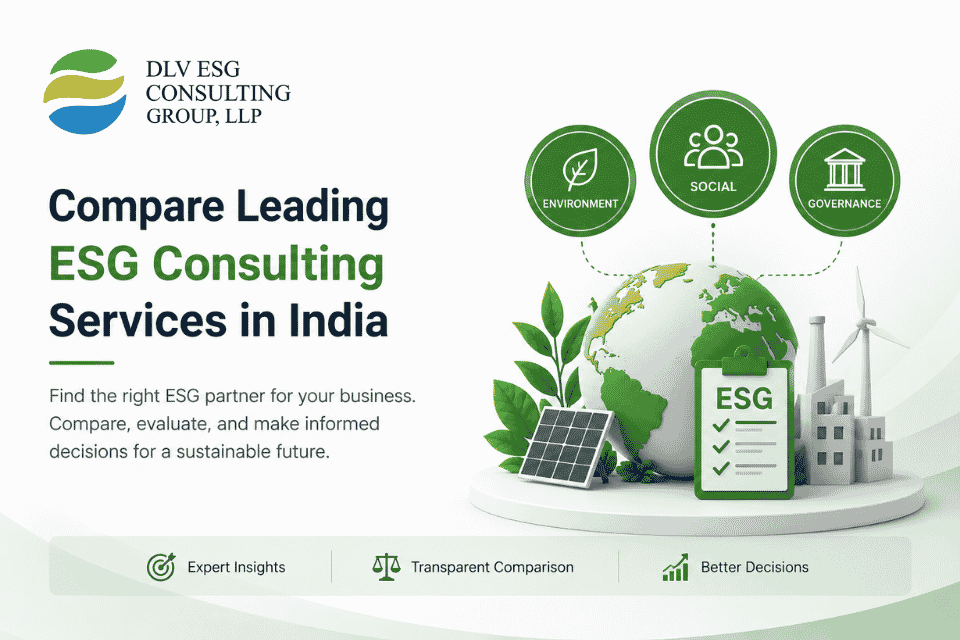
Professional blog banner for BRSR Reporting for Indian Listed Companies, highlighting SEBI compliance, sustainability reporting, ESG disclosures, and BRSR Core requirements in India.

Business Responsibility and Sustainability Reporting (BRSR) is a SEBI-mandated ESG disclosure framework applicable to India's top 1,000 listed companies. It requires structured reporting across 9 NGRBC principles, covering environmental, social, and governance metrics. BRSR Core—a subset of high-impact KPIs—is being progressively rolled out from FY 2023–24, with third-party assessment or assurance becoming mandatory for larger listed entities.

Sustainability reporting has moved from boardroom aspiration to regulatory obligation for Indian companies. SEBI's BRSR framework is the clearest signal yet that ESG performance is no longer optional—it is a measurable, disclosed, and verifiable part of doing business on Indian stock exchanges.

For manufacturers, exporters, MSMEs entering listed markets, and companies already navigating compliance, understanding BRSR is not just about ticking boxes. It is about positioning your organization as transparent, accountable, and investment-ready in a landscape where sustainability credentials increasingly influence capital allocation decisions.

This guide breaks down everything you need to know about BRSR—what it is, who it applies to, how it is structured, what BRSR Core demands, and how the compliance timelines are evolving under SEBI's latest circulars.

What Is BRSR and Why Did SEBI Introduce It?

The Business Responsibility and Sustainability Report (BRSR) is a standardized disclosure framework introduced by SEBI in May 2021. It replaced the earlier Business Responsibility Report (BRR), which had been in place since 2012 but lacked quantitative ESG metrics and comparability across companies.

BRSR was designed to bring India's sustainability reporting closer to global frameworks like GRI (Global Reporting Initiative) and the UN Sustainable Development Goals, while grounding disclosures in India's own National Guidelines on Responsible Business Conduct (NGRBC).

The core purpose is straightforward: require companies to disclose how they are managing their environmental footprint, treating their workforce, engaging stakeholders, and governing their operations—in a format that investors, regulators, and the public can actually compare and act on.

Which Companies Are Required to File BRSR?

BRSR filing is mandatory for the top 1,000 listed companies by market capitalization on Indian stock exchanges. These companies must include their BRSR disclosures in their annual reports and file in XBRL format with SEBI.

The rollout has been phased:

  • FY 2022–23 onward: All top 1,000 listed entities must file the BRSR (mandatory, no assurance required at this stage)
  • FY 2023–24 onward: Top 150 listed entities must also comply with BRSR Core, including third-party assurance
  • FY 2024–25 onward: BRSR Core applicability expands to the top 250 listed entities
  • FY 2025–26 onward: Top 500 listed entities
  • FY 2026–27 onward: Top 1,000 listed entities

Companies outside the top 1,000 may choose to voluntarily adopt BRSR. For MSMEs and exporters with global supply chain relationships, voluntary BRSR adoption is increasingly relevant—especially as value chain disclosure requirements tighten.

BRSR filing is mandatory for the top 1,000 listed companies by market capitalization on Indian stock exchanges. These companies must include their BRSR disclosures in their annual reports and file in XBRL format with SEBI.

The rollout has been phased:

  • FY 2022–23 onward: All top 1,000 listed entities must file the BRSR (mandatory, no assurance required at this stage)
  • FY 2023–24 onward: Top 150 listed entities must also comply with BRSR Core, including third-party assurance
  • FY 2024–25 onward: BRSR Core applicability expands to the top 250 listed entities
  • FY 2025–26 onward: Top 500 listed entities
  • FY 2026–27 onward: Top 1,000 listed entities

Companies outside the top 1,000 may choose to voluntarily adopt BRSR. For MSMEs and exporters with global supply chain relationships, voluntary BRSR adoption is increasingly relevant—especially as value chain disclosure requirements tighten.

How Is the BRSR Structured? What Are the Three Sections?

The BRSR is organized into three main sections, each serving a distinct purpose.

Section A: General Disclosures

This section captures foundational company information—corporate identity, business operations, employee data, supply chain details, and CSR activities. It provides the context within which the company's ESG performance is assessed.

Section B: Management and Process Disclosures

Section B covers the governance mechanisms a company has in place for sustainability: policies, board oversight, grievance redressal mechanisms, and whether the organization has mapped its business activities against the NGRBC principles.

Section C: Principle-wise Performance Disclosures

This is the most detailed and consequential section. It requires companies to report against all 9 principles of the NGRBC, which are:

  1. Ethics, Transparency & Accountability: Conduct business with integrity and disclose performance across economic, social, and environmental dimensions.
  2. Sustainable and Safe Products: Design and manage products and services to minimize environmental and social harm throughout their lifecycle.
  3. Employee Well-being: Ensure fair, dignified, and inclusive treatment for all employees, extending care to their families.
  4. Stakeholder Responsiveness: Acknowledge and respond to the interests of shareholders, communities, and other affected parties.
  5. Human Rights Advocacy: Respect human rights in all business operations, consistent with the Indian Constitution and international norms.
  6. Environmental Responsibility: Minimize ecological impact, adopt the Precautionary Principle, and actively work to protect the environment.
  7. Ethical Policy Engagement: Engage with public policy and regulators responsibly, transparently, and in the public interest.
  8. Inclusive and Equitable Growth: Contribute to addressing social and economic inequities, aligned with national development priorities.
  9. Consumer Engagement and Value: Provide safe, high-quality products at responsible prices while minimizing the negative impacts of consumption.

Within each principle, disclosures are classified as Essential Indicators (mandatory) and Leadership Indicators (voluntary but recommended for companies aiming to demonstrate superior ESG performance).

What Is BRSR Core and How Is It Different from the Full BRSR?

BRSR Core is a focused subset of high-impact Key Performance Indicators (KPIs) within the broader BRSR framework. It was introduced by SEBI via circular dated July 12, 2023, to enable meaningful third-party verification of the most material ESG metrics.

BRSR Core is built around 9 attributes that cut across environmental, social, and governance dimensions:

  1. Greenhouse gas (GHG) emissions
  2. Water footprint
  3. Energy consumption
  4. Biodiversity
  5. Waste generation
  6. Social capital (community engagement, CSR)
  7. Employees including women (gender diversity, wages)
  8. Open-ness of business (transparency and anti-corruption)
  9. Supply chain / value chain ESG performance

SEBI's March 28, 2025 circular (No. SEBI/HO/CFD/CFD-PoD-1/P/CIR/2025/42) introduced several significant updates to BRSR Core:

  • Assessment or Assurance—not just Assurance: Listed entities may now choose either "Assessment" or "Assurance" for BRSR Core verification, as per standards developed by the Industry Standards Forum (ISF) in consultation with SEBI. This reduces compliance costs and makes the verification process more accessible.
  • New KPIs added: Job creation in small towns, openness of business, and gross wages paid to women are now included.
  • PPP-adjusted intensity ratios: Purchasing Power Parity-adjusted intensity ratios are now part of BRSR Core for better global comparability.

Independence requirements: Assessment or Assurance Providers must have relevant expertise and must not sell products or offer consulting services to the company they are verifying.

What Are the Latest SEBI Updates on Value Chain ESG Disclosures?

Value chain ESG reporting has been one of the more complex—and debated—aspects of BRSR. SEBI's original intent was to require larger listed companies to collect and disclose ESG data from their upstream and downstream partners.

The March 28, 2025 circular relaxed several of these requirements:

  • Revised threshold: The value chain now only includes upstream and downstream partners contributing at least 2% of the entity's total purchases and sales (by value).
  • Coverage cap: Listed entities may limit their value chain disclosures to cover 75% of total purchases and sales.
  • Deferred mandatory timelines: Mandatory ESG value chain disclosures are now postponed. For FY 2025–26, ESG disclosures for value chain partners will be voluntary for the top 250 listed entities. For FY 2026–27, voluntary assessment or assurance for value chain ESG disclosures applies.
  • First-year relaxation: For FY 2025–26, reporting prior-year (FY 2024–25) ESG value chain data is also voluntary.

Additionally, Green Credit disclosures are now mandatory under Principle 6 of BRSR from FY 2024–25 onward. Both the listed entity and its top 10 value chain partners (by purchase and sales value) may be required to disclose Green Credits generated or procured.

What Challenges Do Indian Companies Face in BRSR Compliance?

BRSR compliance is not a documentation exercise—it requires a functioning ESG data management infrastructure, cross-functional coordination, and the ability to engage suppliers for value chain data. The challenges are real and often underestimated.

Data quality and availability: Many Indian manufacturers and listed companies do not yet have systematic processes for tracking energy consumption, water usage, or waste generation at a granular level. Preparing accurate BRSR disclosures requires building these systems from scratch in many cases.

Value chain engagement: Getting ESG data from suppliers—especially smaller ones—is challenging. Many tier-2 and tier-3 suppliers lack the capacity or systems to report ESG metrics consistently.

Selecting the right assessment or assurance provider: Under SEBI's updated framework, the assessor or assurance provider must be independent and qualified. Choosing the right partner—one with domain expertise in ESG metrics and no conflicts of interest—is a critical decision.

Keeping pace with regulatory changes: SEBI has revised BRSR requirements multiple times since the framework's introduction in 2021. Staying current with circular updates, new KPIs, revised thresholds, and changing timelines requires dedicated compliance attention.

Aligning BRSR with global frameworks: Companies with export relationships or international investors often need their BRSR disclosures to align with GRI Standards, the EU's CSRD, or other global frameworks. Bridging these requirements without duplicating effort is a persistent challenge.

How Should an Indian Listed Company Approach BRSR Preparation?

A structured, phased approach works best. Here is a practical roadmap:

Step 1 — Materiality assessment: Identify which ESG issues are most significant to your business model, stakeholders, and sector. This shapes the depth of disclosure across the 9 NGRBC principles.

Step 2 — Data gap analysis: Map the data you currently collect against what BRSR requires. Energy, emissions, water, waste, employee metrics, and supply chain data are common gaps.

Step 3 — Governance setup: Designate ownership for BRSR reporting—typically a cross-functional team covering finance, operations, HR, and sustainability. Board-level oversight is essential, not optional.

Step 4 — Data collection and verification: Build or integrate systems to collect ESG data consistently. For BRSR Core companies, plan for third-party assessment or assurance from the outset.

Step 5 — Disclosure drafting: Prepare responses to all mandatory Essential Indicators. Assess the feasibility and strategic benefit of addressing Leadership Indicators as well.

Step 6 — Review and filing: Review disclosures against SEBI's latest format, include BRSR in your annual report, and file in XBRL format with SEBI.

BRSR vs. BRR: What Changed and Why It Matters?

The Business Responsibility Report (BRR), which predated BRSR, was largely qualitative—companies could describe their sustainability initiatives without providing hard numbers. BRSR changed this fundamentally.

BRSR requires quantitative disclosures: absolute GHG emissions, energy intensity ratios, water withdrawal volumes, number of employees covered under health and safety systems, and more. It introduces comparability across companies and years—something the BRR never achieved. For investors conducting ESG due diligence, this shift is significant. Verifiable, standardized data matters far more than narrative descriptions of intent.

Start Your BRSR Compliance Journey with Expert Guidance

Navigating BRSR—and staying compliant as SEBI continues to refine the framework—requires more than a checklist. It requires a partner who understands both the regulatory landscape and the operational realities of Indian businesses.

DLV ESG Consulting Group LLP is a Gurgaon-based ESG and ISO consulting firm with deep expertise in BRSR reporting, ESG gap assessments, sustainability strategy, and compliance advisory for Indian manufacturers, exporters, MSMEs, and listed companies. Whether you are preparing your first BRSR filing, upgrading to BRSR Core compliance, or building an ESG data infrastructure for the long term, our team is here to help.

Get in touch with us:

Frequently Asked Questions about BRSR Reporting

Who is required to file BRSR with SEBI?

The top 1,000 listed companies by market capitalization in India are required to file BRSR as part of their annual report, in XBRL format with SEBI. Smaller companies may adopt BRSR voluntarily.

What is the difference between BRSR and BRSR Core?

BRSR is the full sustainability disclosure framework covering 9 NGRBC principles. BRSR Core is a focused subset of 9 high-impact KPIs within that framework, for which third-party assessment or assurance is mandated for larger listed companies on a phased timeline.

What are the value chain disclosure requirements under BRSR in FY 2025–26?

For FY 2025–26, value chain ESG disclosures are voluntary for the top 250 listed entities. The value chain includes upstream and downstream partners contributing at least 2% of the entity's total purchases or sales by value, with disclosures capped at 75% of total purchases and sales coverage.

What does "assessment" mean in BRSR Core, and how is it different from "assurance"?

Both terms refer to third-party verification of BRSR Core data. Assurance follows established auditing standards and provides varying levels of confidence (limited or reasonable). Assessment, introduced as an option by SEBI in March 2025, follows standards developed by the Industry Standards Forum (ISF) in consultation with SEBI and is designed to reduce costs while keeping the process profession-agnostic.

Are MSMEs and unlisted companies required to file BRSR?

BRSR is currently mandatory only for India's top 1,000 listed companies. However, MSMEs and unlisted companies can voluntarily adopt BRSR, and may face indirect pressure to disclose ESG data if they are suppliers to listed companies subject to value chain reporting requirements.

What changed in SEBI's March 28, 2025 BRSR circular?

The March 28, 2025 circular (SEBI/HO/CFD/CFD-PoD-1/P/CIR/2025/42) introduced several key updates: companies may now choose "assessment" or "assurance" for BRSR Core verification; mandatory value chain ESG disclosures were deferred, making them voluntary for the top 250 companies in FY 2025–26; new KPIs were added (job creation in small towns, gross wages paid to women, openness of business); and Green Credit disclosures became mandatory from FY 2024–25.

BRSR Core assessment or assurance is mandatory for the top 250 listed entities (by market capitalization) from FY 2024–25 onward, per SEBI's phased rollout schedule.

BRSR Core assessment or assurance is mandatory for the top 250 listed entities (by market capitalization) from FY 2024–25 onward, per SEBI's phased rollout schedule.

5 thoughts on “Best BRSR Reporting Guide for Indian Listed Companies

  1. Monika says:

    BEST ESG CONSULTING IN INDIA

  2. Shubham Sain says:

    BEST BRSR REPORTING

  3. rachin says:

    dlv team all the best

  4. Mannu says:

    This was a really helpful read. Learned something new today.

  5. surender sain says:

    Very useful information, especially for beginners.

Leave a Reply

Your email address will not be published. Required fields are marked *