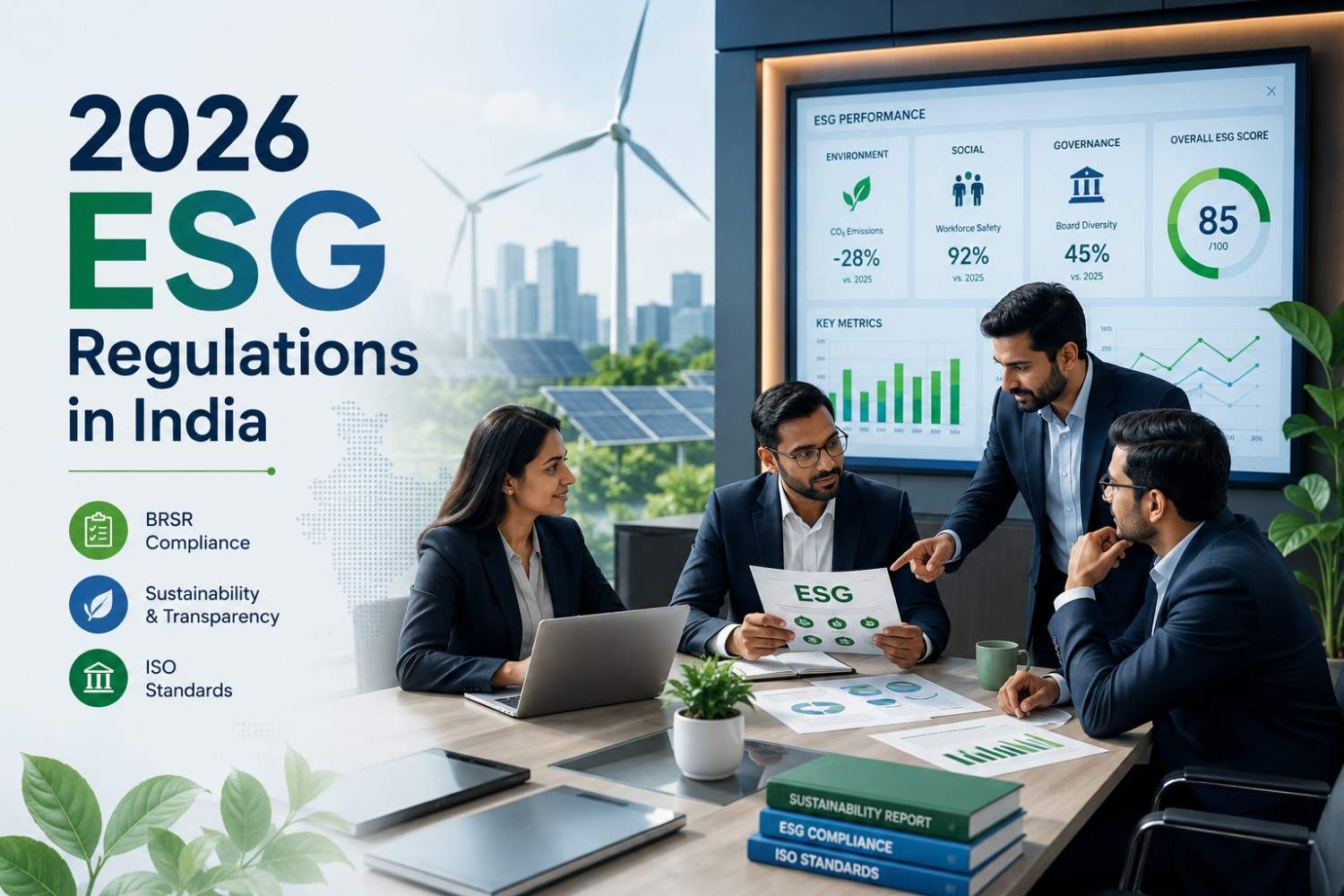
2026 ESG Regulations in India: What Your Business Needs to Know
Quick answer: In 2026, India's ESG rules tighten further. SEBI's BRSR mandate now reaches the top 1,000 listed companies, and BRSR Core assurance expands to the top 500 in FY2025–26 and to all top 1,000 in FY2026–27. Value chain ESG disclosures, ISO certifications, and social compliance audits like SMETA and SA 8000 are becoming standard expectations across supply chains.
ESG rules in India have shifted from voluntary good practice to firm regulatory requirement. The Securities and Exchange Board of India (SEBI) keeps widening the net—more companies, deeper disclosures, and independent assurance. At the same time, global buyers push ESG standards down their supply chains, pulling thousands of MSMEs and exporters into the compliance conversation.
If you run a listed company, a manufacturing unit, or a business that supplies large corporates, 2026 affects you. This guide explains exactly what's changing, what you must prepare, and how to stay ahead.
What you'll learn:
- SEBI's BRSR mandate and the phased assurance timeline
- The BRSR Core framework and value chain disclosure rules
- What listed companies and MSME suppliers need to do
- How ISO and social compliance fit into ESG
- Where to get expert help
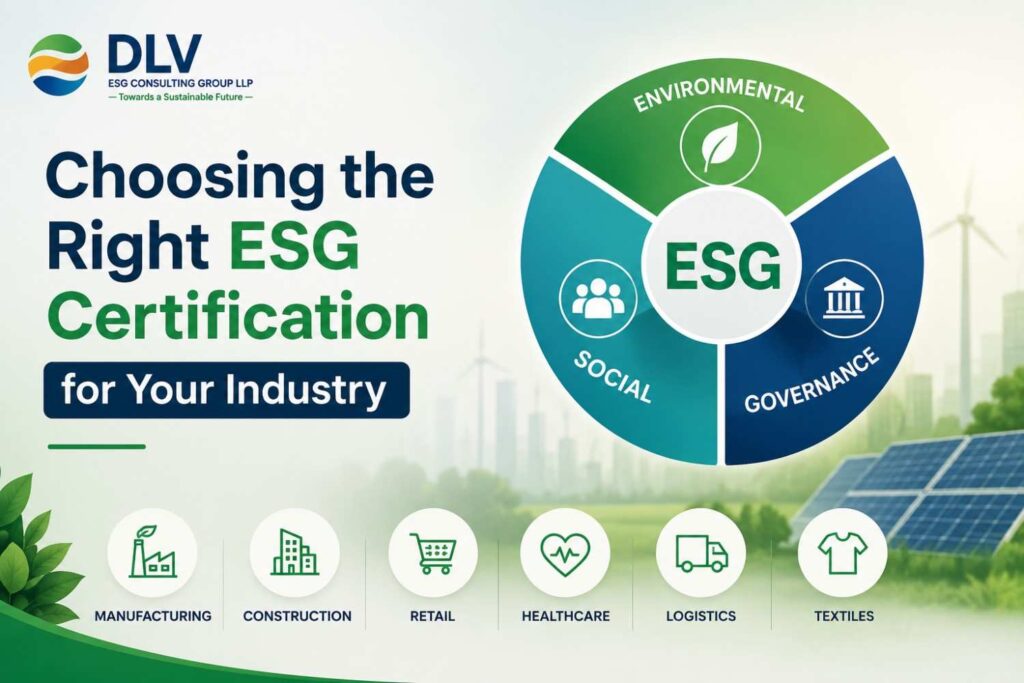
ESG Regulations in India:What is BRSR and why does it matter in 2026?
BRSR stands for Business Responsibility and Sustainability Report. It is SEBI's mandatory ESG disclosure framework for India's largest listed companies. The report covers performance across environmental, social, and governance areas—everything from greenhouse gas emissions and energy use to worker safety, community impact, and board accountability.
Here's why it matters now: BRSR is no longer just a reporting exercise. SEBI has added independent assurance requirements through the BRSR Core framework, meaning a third party must verify your data. That raises the bar from "fill in the form" to "prove your numbers hold up."
For 2026, the mandate applies to the top 1,000 listed companies by market capitalization. And the assurance net keeps widening each year.
Takeaway: BRSR is the backbone of India's ESG regulation, and assurance is now part of the deal.
What is SEBI's phased BRSR assurance timeline?
SEBI rolled out BRSR Core assurance in stages so companies could adapt. Each financial year, more companies fall under the assurance requirement.
Here is the phased rollout:
- FY2023–24 — Top 150 listed companies must obtain limited assurance on BRSR Core indicators.
- FY2024–25 — The requirement extends to the top 250 listed companies, with value chain disclosures also kicking in for this group.
- FY2025–26 — Coverage expands to the top 500 listed companies.
- FY2026–27 — All top 1,000 listed companies must comply, with value chain ESG assessment widening further.
The pattern is clear and predictable. If your company sits near the top 1,000 mark, your assurance obligation is coming—if it hasn't arrived already. Waiting until the deadline leaves no room to fix weak data or failed checks.
Takeaway: Know your market-cap ranking and map your assurance deadline now, not later.
What is the BRSR Core framework?
BRSR Core is a focused subset of the full BRSR report. SEBI introduced it through its July 2023 circular to identify the key ESG metrics that demand independent verification.
While the full BRSR covers a broad range of disclosures, BRSR Core zeroes in on a defined set of attributes with clear, measurable key performance indicators. These include items such as greenhouse gas intensity, water consumption, energy use, waste management, and aspects of social performance like wages and worker wellbeing.
The point of BRSR Core is credibility. By requiring "reasonable" or "limited" assurance on these specific indicators, SEBI aims to reduce greenwashing and give investors data they can trust. The numbers you report can no longer be rough estimates—they need documentation and an audit trail behind them.
Takeaway: BRSR Core is where your ESG data faces the most scrutiny, so build clean records around these indicators first.
What are value chain ESG disclosure requirements?
This is the part that pulls smaller businesses into the picture. SEBI's July 2023 circular, refined further by its March 2025 circular, introduced ESG disclosures for the value chains of large listed companies.
In simple terms, big companies must now report on the ESG performance of their key suppliers and partners. A company's "value chain" here generally covers the partners that account for a significant share of its purchases and sales. That means your large corporate buyers will start asking you—their supplier—for ESG data.
The March 2025 circular eased some of the burden by making certain value chain assessments more flexible and largely on a "comply or explain" basis, while also introducing voluntary disclosures linked to green credits. Even so, the direction is set: ESG expectations are flowing downstream to suppliers of every size.
Takeaway: If you supply a large listed company, expect ESG questionnaires and audit requests—prepare your data before they ask.
What do listed companies need to prepare?
If you're a listed company within the top 1,000, your to-do list is concrete. Strong preparation now prevents painful surprises during assurance.
Focus on these priorities:
- Accurate data systems. Set up reliable tracking for emissions, energy, water, waste, and workforce metrics. Assurance providers will trace your figures back to source records.
- BRSR Core readiness. Identify which Core indicators apply to you and build documentation that can withstand third-party verification.
- Value chain mapping. Identify your significant suppliers and customers, and begin collecting ESG information from them.
- Internal governance. Assign clear ownership for ESG data, with board-level oversight and documented review.
- Early assurance engagement. Bring in your assurance provider before the deadline so gaps surface while there's still time to fix them.
Takeaway: Treat assurance like a financial audit—clean data and clear ownership are non-negotiable
What do MSME suppliers need to do?
Many small and mid-size businesses assume ESG rules don't apply to them. That assumption is risky. Through value chain disclosures, your large clients now need ESG data from you to complete their own reporting.
Here's how to get ahead:
- Measure your basics. Start tracking energy use, emissions, water, and waste, even at a simple level.
- Document labour practices. Keep clear records of wages, working hours, safety measures, and grievance handling.
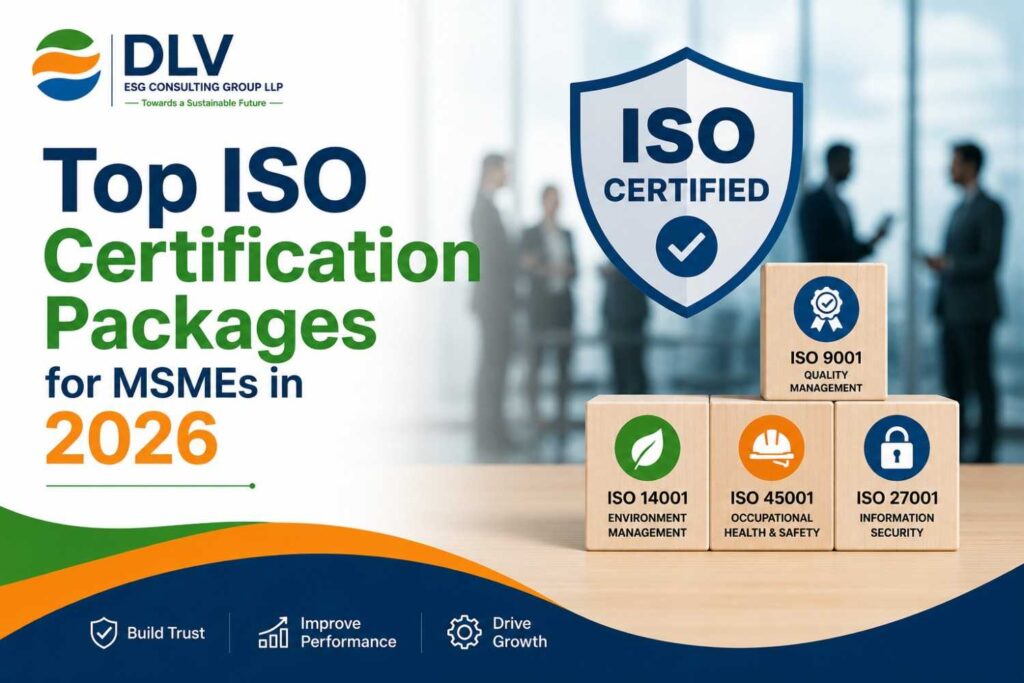
- Pursue relevant certifications. ISO 14001 and ISO 45001 give your ESG claims structure and credibility.
- Prepare for buyer audits. Export units especially should be ready for social compliance audits like SMETA and SA 8000.
Getting ESG-ready isn't just defensive. Suppliers with solid ESG credentials win more contracts and stronger relationships with large buyers.
Takeaway: ESG readiness is fast becoming a condition of doing business with big clients—start small, but start now.
ESG isn't only about reports. Recognized certifications turn your commitments into verified systems that buyers and regulators trust. They give your ESG strategy a credible operational foundation.
These standards matter most:
- ISO 14001 (Environmental Management). Builds a structured system to manage waste, energy, resources, and environmental risk—directly supporting the "E" in ESG.
- ISO 45001 (Occupational Health and Safety). Helps factories and offices prevent injuries and protect workers, anchoring the "S" pillar.
- SA 8000. A leading social accountability standard covering fair labour practices and ethical working conditions.
- SMETA (Sedex). One of the most widely requested ethical trade audits, often mandatory before global buyers place orders.
Together, these certifications back up your BRSR and value chain disclosures with real, audited evidence—not just statements on paper.
Takeaway: Certifications convert ESG promises into proof, which is exactly what regulators and buyers want to see.
2026 ESG Regulations in India:What are common ESG compliance mistakes to avoid?
Even well-meaning businesses trip up. Knowing the common pitfalls helps you sidestep them.
- Waiting for the deadline. Assurance and value chain readiness take months. Last-minute prep leads to failed checks.
- Estimating instead of measuring. Rough numbers won't survive third-party assurance. Build real data systems.
- Ignoring the supply chain. Suppliers who dismiss value chain requests risk losing large contracts.
- Treating ESG as a one-off. Rules keep evolving, so ESG needs an ongoing review cycle, not a single push.
- Skipping documentation. Without an audit trail, even accurate data fails verification.
Takeaway: Most ESG failures trace back to delay and weak data—fix both early.
How does DLV ESG help your business stay compliant?
Navigating SEBI's expanding rules alone is tough. DLV ESG Consulting Group LLP, based in Gurgaon, Haryana, helps Indian businesses turn ESG compliance into a clear, manageable process.
The firm has certified more than 500 businesses across 15+ ISO standards using a 100% NABCB-compliant process, with most engagements completed in 3 to 6 months. DLV ESG serves manufacturers, exporters, MSMEs, textile units, FMCG companies, infrastructure firms, and healthcare organizations across India.
Here's how DLV ESG supports your 2026 ESG goals:
- BRSR reporting and assurance readiness. Complete, accurate, audit-ready BRSR and BRSR Core preparation aligned with SEBI's requirements.
- Value chain support. Help for both listed companies and their suppliers to meet ESG disclosure expectations.
- ISO certification. End-to-end support for ISO 14001, ISO 45001, ISO 9001, ISO 50001, and more.
- Social and labour compliance. Advisory and audit preparation for SA 8000, SMETA, and POSH compliance.
- Carbon and fire safety. Scope 1, 2, and 3 emissions assessments, Net Zero roadmaps, and certified fire safety training.
Whether you're a listed company facing assurance or an MSME preparing for a buyer audit, DLV ESG offers practical, phased, budget-aware support.
Conclusion: Get ahead of the 2026 deadline
India's ESG regulations are moving in one clear direction—broader coverage, deeper disclosures, and mandatory assurance. SEBI's BRSR mandate now reaches the top 1,000 listed companies, BRSR Core assurance keeps expanding, and value chain rules are pulling suppliers of every size into the picture. Add ISO certifications and social compliance audits, and the message is simple: ESG readiness is now part of doing business in India.
The businesses that prepare early will breeze through assurance and win new contracts. Those that wait will scramble. Start by measuring your data, documenting your practices, and mapping your deadlines today.
Need expert guidance? DLV ESG Consulting Group LLP offers a free consultation to map your path to compliance.
- Website:https://dlvesg.com
- Email:info@dlvesg.com
- LinkedIn: linkedin.com/in/dlv-esg-consulting-4914543b1
- Instagram: @dlvconsultingroup
- Address: Ground Floor, Spaze Tristar Mall, Sector 92, Gurgaon, Haryana, India
Frequently asked questions
SEBI requires the top 1,000 listed companies by market capitalization to file BRSR reports. Many MSME suppliers and export-focused businesses are also asked to share ESG data by their larger corporate clients through value chain disclosures.
Assurance applies to the top 150 companies from FY2023–24, the top 250 from FY2024–25, the top 500 from FY2025–26, and all top 1,000 from FY2026–27. Check your market-cap ranking to find your deadline.
Absolutely. ISO 14001 and ISO 45001 provide structured, audited systems for environmental and safety management. They strengthen the credibility of your BRSR and value chain disclosures with real evidence.
Yes. Large listed companies must report on the ESG performance of their significant suppliers and customers. This means many MSMEs will receive ESG questionnaires and audit requests from their large buyers.
BRSR is the full sustainability report covering a broad set of ESG disclosures. BRSR Core is a focused subset of key indicators that require independent assurance to ensure the data is verified and credible.
very knowledgeable content great
This blog covers the topic in a simple and clear way.