what is esg? Why is ESG Important?

What is ESG? A Complete Guide for Businesses.

Introduction. What is ESG?

In today’s rapidly changing business environment, companies are expected to do more than just generate profits. Stakeholders, investors, and customers now pay close attention to how organizations impact the environment, treat their employees, and follow ethical business practices. Issues like climate change, workplace safety, and corporate transparency have made responsible business operations more important than ever.

This shift has led to the growing importance of ESG — Environmental, Social, and Governance. Businesses across industries, whether small startups, large corporations, or manufacturing units, are now focusing on ESG practices to stay compliant, reduce risks, and build long-term sustainability.

Understanding what is ESG is the first step for any organization looking to improve its operations and align with global standards. ESG not only helps businesses manage environmental and social responsibilities but also strengthens internal systems, improves decision-making, and builds trust with clients and stakeholders.

In simple terms, ESG is about creating a balance between business growth and responsibility — ensuring that companies operate safely, ethically, and sustainably in the long run.

What is ESG?

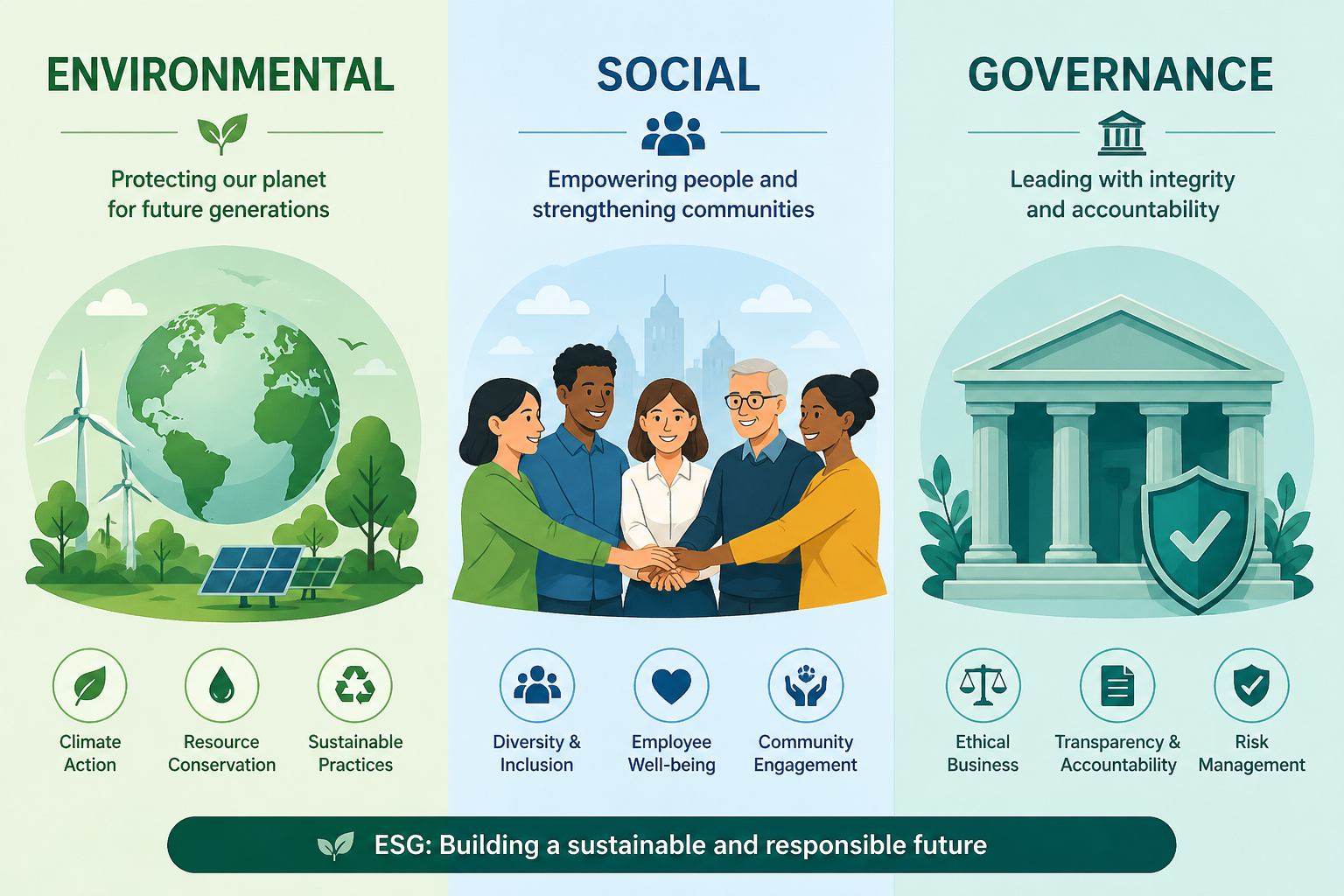
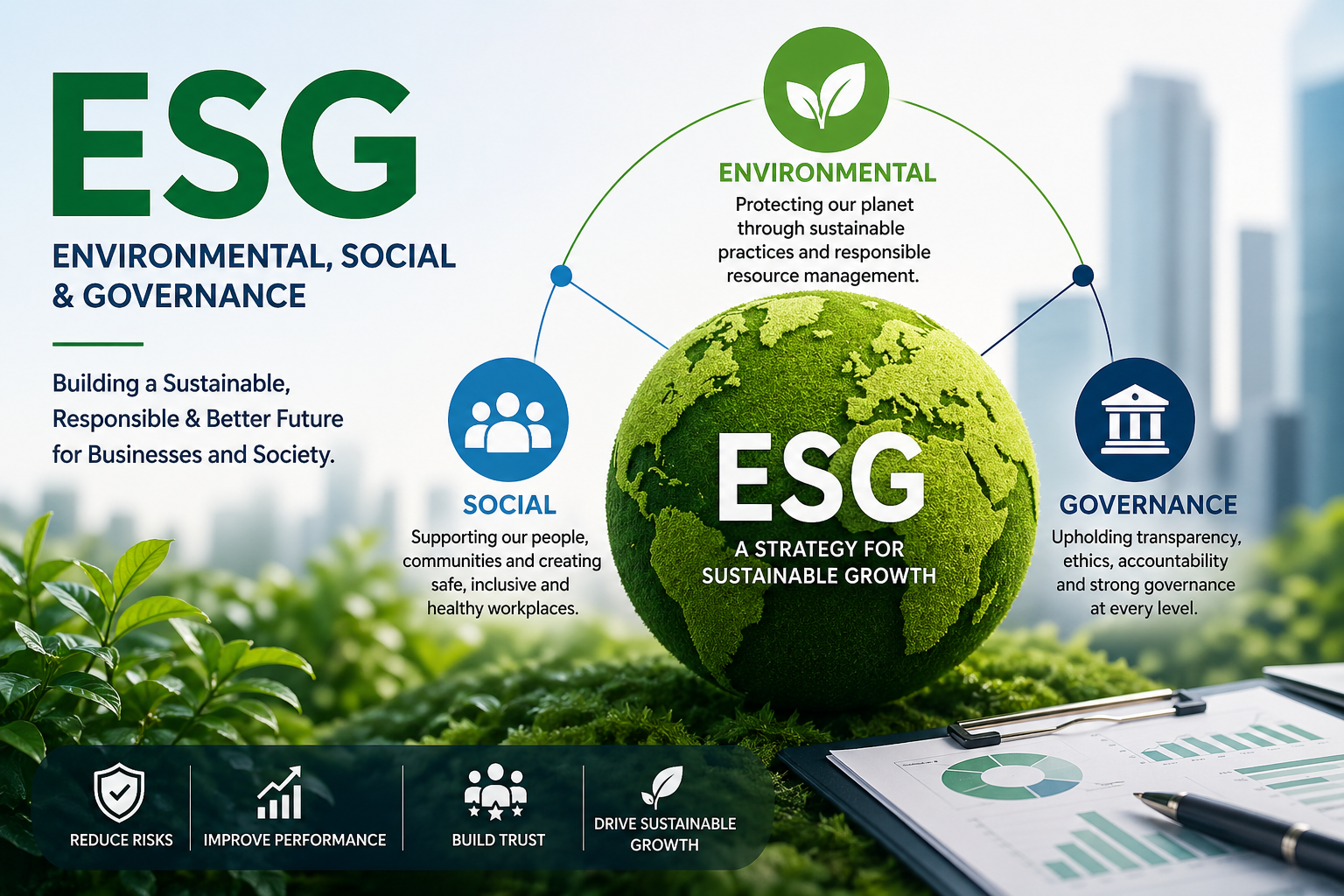
What is ESG? ESG stands for Environmental, Social, and Governance. It is a framework used to evaluate how a company operates responsibly by managing its environmental impact, social responsibilities, and internal governance systems.

ESG is not just a concept — it is a structured approach that helps businesses measure and improve their performance beyond financial results. Today, companies are expected to focus on sustainability, employee safety, ethical practices, and compliance with regulations.

In simple terms, ESG helps businesses:

✔ Reduce environmental impact – by managing energy usage, controlling pollution, reducing waste, and lowering carbon emissions

✔ Ensure employee safety and well-being – by providing a safe workplace, proper training, fair working conditions, and health support

✔ Maintain compliance and ethical practices – by following laws, maintaining transparency, and implementing strong governance systems

ESG enables organizations to build trust with stakeholders, improve operational efficiency, and create long-term sustainable growth.

ESG Components Explained in What is ESG

  • Environmental
  • Social
  • Governance
what is ESG? ESG stands for

Environmental

The Environmental (E) component of ESG focuses on how a business interacts with the environment and manages natural resources responsibly. It includes efforts to reduce environmental impact, control pollution, and promote sustainable practices in daily operations.

Organizations today are expected to minimize their carbon footprint, optimize energy usage, and adopt eco-friendly processes. Environmental responsibility not only helps in protecting nature but also reduces operational risks and improves long-term efficiency.

🔹 Key Services:

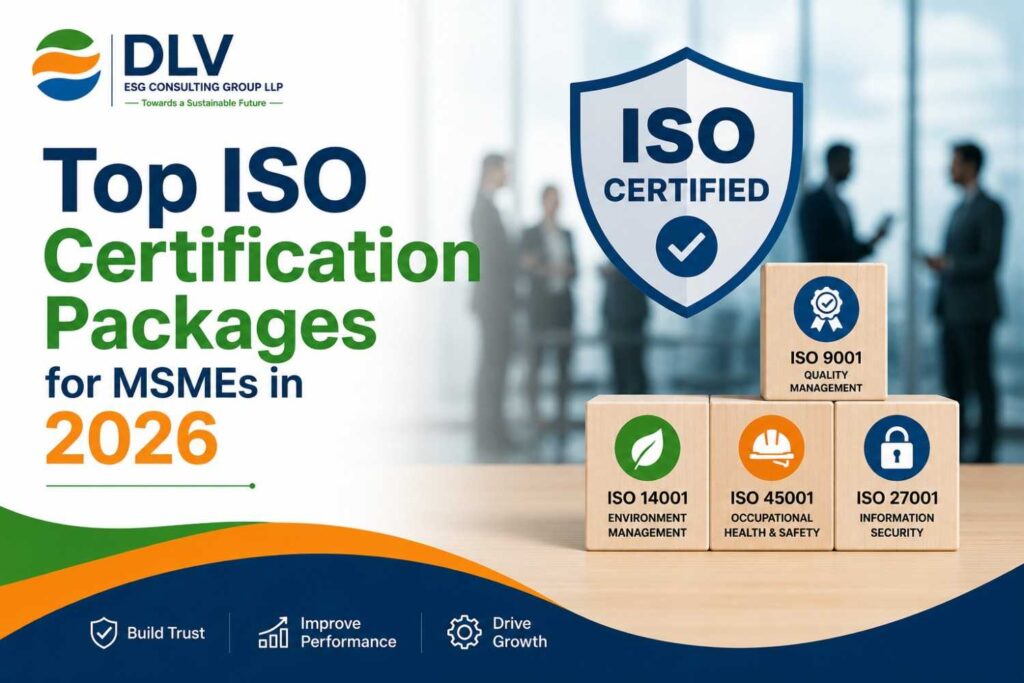
ISO 14001 – Environmental Management System

Helps businesses establish structured processes to manage environmental responsibilities, reduce waste, and improve resource efficiency.

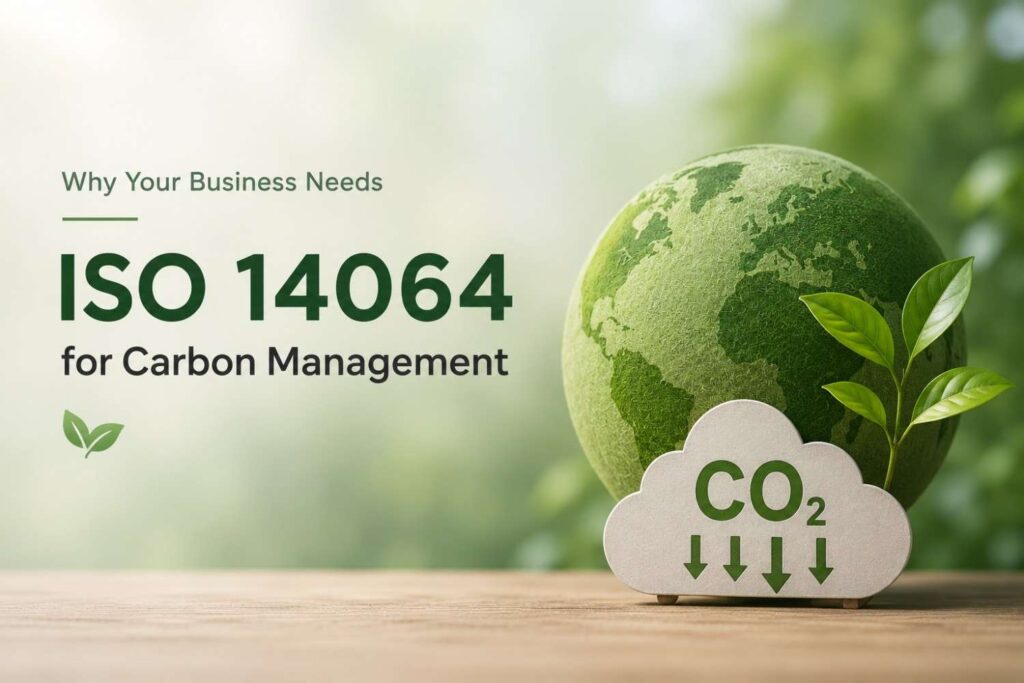
ISO 14064 – Carbon Emission Management (Scope 1, 2 & 3)

Focuses on measuring, monitoring, and reducing greenhouse gas emissions across all operational levels.

Energy Management & Conservation

Improves energy efficiency, reduces operational costs, and supports sustainability goals.

Zero Liquid Discharge (ZLD) Audit & Advisory

Ensures that no industrial wastewater is released into the environment, helping businesses meet strict environmental regulations.

These environmental services help organizations reduce risks, improve sustainability performance, and comply with environmental regulations.

Social

The Social component focuses on how a company manages relationships with employees, suppliers, customers, and the community. It emphasizes workplace safety, employee well-being, fair labor practices, and social responsibility.

A strong social framework ensures that employees work in a safe, ethical, and supportive environment. It also helps organizations build trust, improve productivity, and maintain a positive brand image.

🔹 Key Services:

Social & Labour Compliance Certifications

Ensure businesses follow ethical labor practices, fair wages, and safe working conditions.

SA 8000 (Social Accountability)

Focuses on improving workplace conditions, employee rights, and ethical standards.

BSCI / SEDEX / SLCP

Global frameworks that help organizations maintain transparency and improve social compliance in supply chains.

Fire Safety Training & First Aid Training

Essential programs that prepare employees to handle emergencies, reduce risks, and ensure workplace safety.

These social practices help organizations create a safe workplace, improve employee satisfaction, and maintain compliance with global labor standards.

Governance

The Governance (G) component focuses on how a company is managed, including its leadership structure, policies, internal controls, and compliance systems. It ensures that businesses operate ethically, transparently, and in accordance with legal requirements.

Good governance is essential for reducing risks, preventing fraud, and building trust with stakeholders. It also helps organizations make better decisions and maintain long-term stability.

🔹 Key Services:

Governance & Risk Certifications

Help businesses establish strong internal controls, manage risks, and ensure compliance with regulations.

ESG & Sustainability Reporting (BRSR, GRI, TCFD, SASB)

Structured reporting frameworks that improve transparency and provide clear insights into ESG performance.

Compliance & Risk Management Solutions

Help organizations identify potential risks, implement policies, and maintain regulatory compliance.

Strong governance ensures transparency, accountability, better decision-making, and smooth business operations.

ESG & Supply Chain Responsibility

Modern ESG practices are not limited to internal operations — they also include how a business manages its supply chain. This means companies are responsible not only for their own activities but also for how their suppliers and partners operate.

In simple words, if a company is following ESG practices, it must ensure that the raw materials, products, and services it uses are sourced ethically, safely, and responsibly.

A weak or non-compliant supply chain can lead to serious issues such as legal risks, poor product quality, reputational damage, and loss of business opportunities. That’s why organizations are now focusing on building transparent, secure, and compliant supply chains.

🔹 Key Services:

Supply Chain & Responsible Sourcing

Helps businesses ensure that their suppliers follow ethical practices, maintain quality standards, and comply with environmental and social requirements.

Supplier Compliance Audit Network (SCAN)

Focuses on improving supply chain security and ensuring that suppliers meet international safety and compliance standards.

Global Security Verification (GSV)

Helps organizations strengthen supply chain security, especially for international trade, by reducing risks related to theft, fraud, and unsafe practices.

Business Environmental Performance Initiative (BEPI)

Supports businesses in improving environmental performance across the supply chain by promoting sustainable and eco-friendly practices.

These services help businesses ensure that their entire supply chain is safe, ethical, and compliant with global standards, which ultimately builds trust with clients, improves operational efficiency, and supports long-term business growth.

Why is ESG Important?

In today’s business environment, ESG is no longer just an option — it has become a key factor for sustainable growth and long-term success. Companies that adopt ESG practices are better prepared to handle risks, meet regulatory requirements, and build a strong reputation in the market.

Implementing ESG helps organizations operate more responsibly while improving overall performance and trust among stakeholders.

🔹 Key Benefits of ESG:

✔ Improves brand reputation

Companies that follow ESG practices are seen as responsible and trustworthy. This improves their image in the market and attracts more customers, partners, and business opportunities.

✔ Builds trust with clients and investors

Investors and clients prefer businesses that are transparent and sustainable. ESG practices show that a company is reliable, ethical, and focused on long-term growth.

✔ Ensures compliance with regulations

With increasing government regulations and reporting requirements, ESG helps businesses stay compliant and avoid legal penalties or issues.

✔ Reduces operational risks

By focusing on safety, environmental impact, and governance, companies can identify risks early and prevent major losses, accidents, or disruptions.

✔ Supports long-term business growth

ESG helps businesses build a strong foundation by improving efficiency, reducing costs, and creating sustainable operations that support long-term success.

In simple words, ESG is not just about compliance — it is about building a business that is safe, responsible, and future-ready.

ESG and Workplace Safety

Workplace safety is a crucial part of ESG, especially under the Social (S) component. It focuses on ensuring that employees work in a safe, secure, and healthy environment. A company that prioritizes workplace safety not only protects its people but also strengthens its overall ESG performance.

In many industries, accidents and safety risks can lead to serious consequences such as injuries, operational delays, financial losses, and legal issues. This is why businesses must take proactive steps to identify risks and prepare for emergencies.

🔹 Key Workplace Safety Practices:

Fire Safety Training

Employees are trained to handle fire emergencies, use fire extinguishers, and respond quickly to prevent damage and injuries.

Emergency Drills

Regular drills help employees understand evacuation procedures and ensure they can act calmly and efficiently during real emergencies.

Risk Assessment

Identifying potential hazards in the workplace helps businesses take preventive actions and reduce the chances of accidents.

First Aid Training

Basic first aid knowledge enables employees to provide immediate support in case of injuries, which can save lives and reduce the severity of incidents.

These safety practices help organizations protect employees, reduce workplace risks, ensure compliance, and create a secure working environment.

In simple terms, workplace safety is not just about following rules — it is about building a culture where employees feel safe, prepared, and confident. Strong safety measures also improve productivity, reduce downtime, and support long-term business sustainability.

How DLV ESG Consulting Group Supports

Implementing ESG practices can be complex, especially for organizations that are just getting started or managing multiple compliance requirements. This is where structured guidance and practical support become important.

DLV ESG Consulting Group works with organizations to help them understand, implement, and improve ESG practices in a practical and result-oriented way. The focus is not just on documentation, but on real implementation that creates long-term value.

🔹 Key Areas of Support:

ESG Consulting and Framework Implementation

Helping businesses understand ESG requirements and implement suitable frameworks based on their industry and operations.

Certification and Compliance Support

Assisting organizations in achieving certifications such as ISO standards, social compliance, and environmental regulations to meet legal and global requirements.

Training and Capacity Building Programs

Conducting training sessions, including fire safety and first aid, to improve employee awareness and prepare teams for real-world situations.

Sustainability and Reporting Solutions

Supporting businesses in preparing ESG reports such as BRSR, GRI, and other frameworks to improve transparency and stakeholder trust.

The approach focuses on practical implementation, continuous improvement, and long-term sustainability, helping organizations not only meet compliance requirements but also build responsible and future-ready operations.

Conclusion

ESG is not just a concept — it is a complete business strategy that helps organizations operate responsibly and sustainably. In today’s competitive and regulated environment, businesses that focus on environmental responsibility, employee safety, and strong governance are better positioned for long-term success.

Understanding what is ESG and implementing the right practices and services can help organizations improve compliance, reduce risks, and create a safe and efficient workplace. It also builds trust with clients, investors, and stakeholders, which is essential for growth.

In simple terms, ESG helps businesses move beyond short-term goals and focus on building a safe, compliant, and future-ready organization.

DLV ESG Consulting Group supports organizations with:

✔ ESG Consulting & Framework Implementation
✔ Sustainability Reporting & Compliance Support
✔ Fire Safety Training & Emergency Preparedness
✔ Certification and Risk Management Solutions

We help businesses build safe, compliant, and responsible operations aligned with ESG practices.

Feel free to connect with us to explore how ESG and workplace safety can support your business growth.

Website: https://dlvesg.com
Email: info@dlvesg.com
LinkedIn: linkedin.com/in/dlv-esg-consulting-4914543b1
Instagram: dlvconsultingroup

FAQ?

What is ESG in simple terms?

ESG stands for Environmental, Social, and Governance. It helps businesses operate responsibly and sustainably.

What is fire safety and why is it important?

Fire safety refers to the practices and measures taken to prevent fire incidents and reduce damage in case of a fire. It is important because it helps protect human life, prevent property loss, and ensure a safe working environment. Proper fire safety systems and training can reduce risks and help control emergencies effectively.

14 thoughts on “What is ESG? Complete Guide with Benefits, Services & Importance

  1. surender sain says:

    Nice content

  2. Mannu says:

    Great knowledge

  3. rachin says:

    Helpful

  4. SHUBHAM says:

    Very helpful

  5. SAHIL SAIN says:

    Greate content

    1. Ritika Jangra says:

      Helpful

  6. Monika says:

    Very knowledgeable

  7. Ak Rao says:

    Informative article

  8. Versha says:

    Easy to understand

  9. Maya says:

    Very simple language to understand, well done

  10. Tannu says:

    Better for future

  11. Minni says:

    Very nice go ahead

  12. Ashish yadav says:

    very nice well done keep it up
    good luck for more best

  13. Ashish says:

    keep it up
    good luck for more best

Leave a Reply

Your email address will not be published. Required fields are marked *