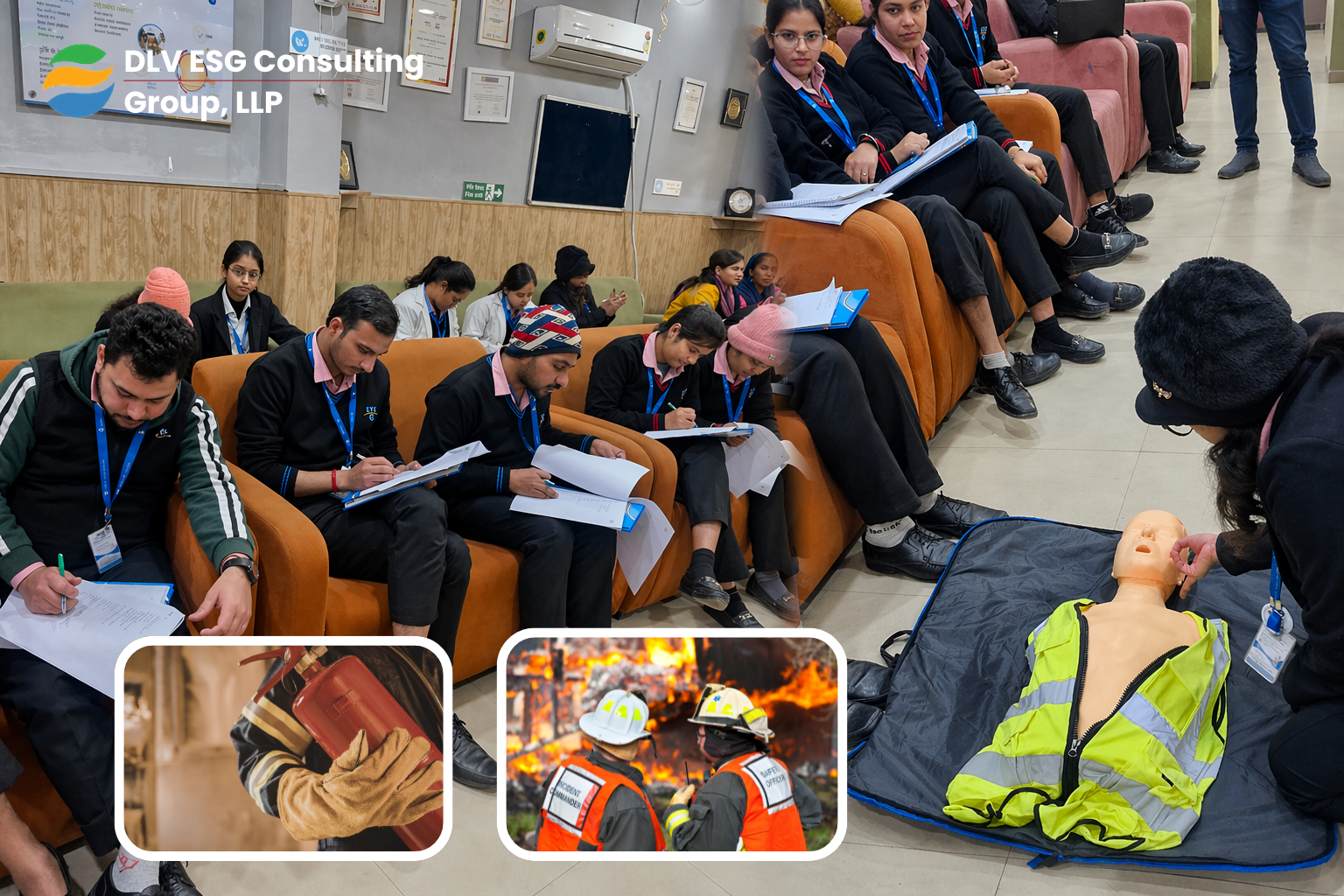

What is Fire Safety?
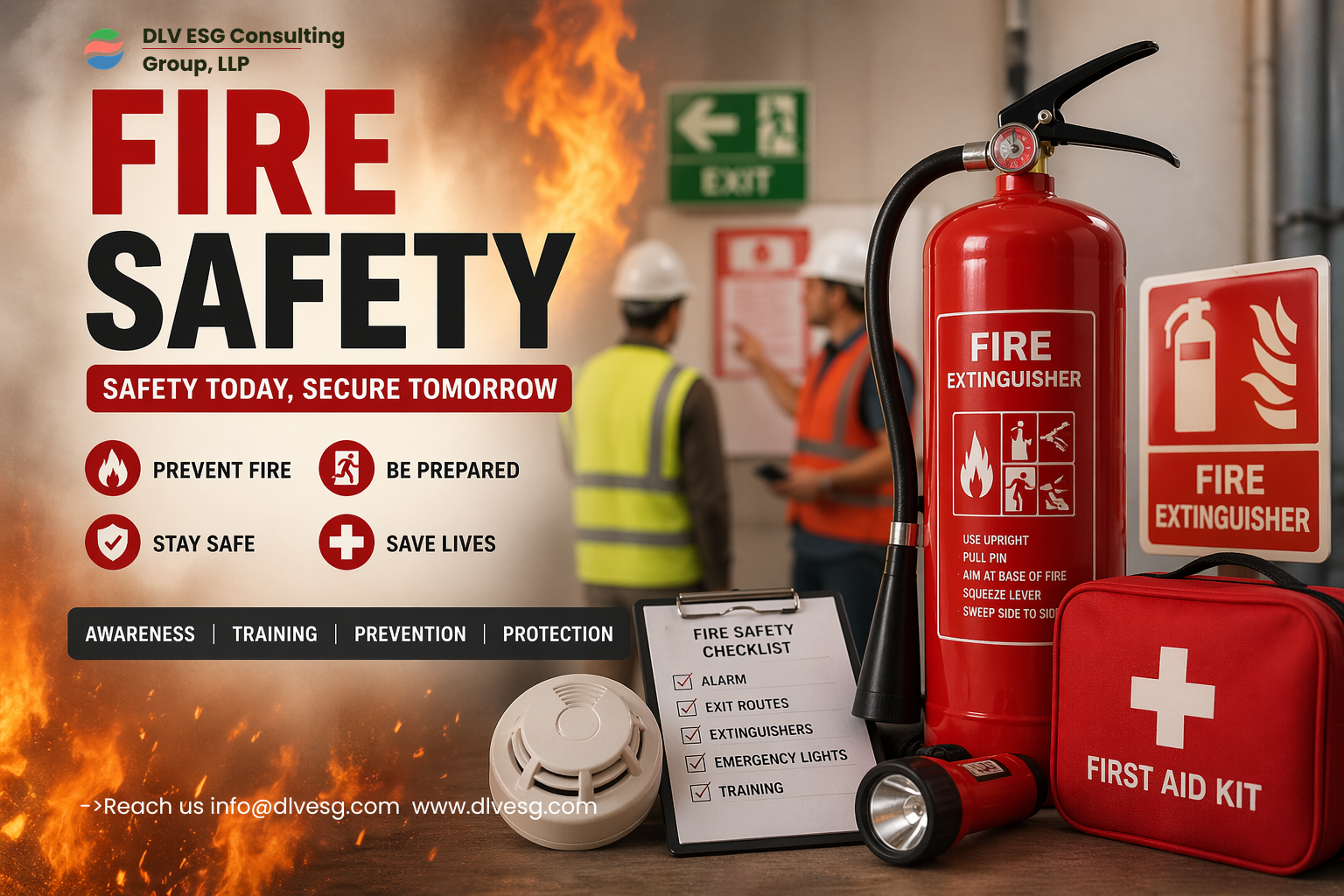
What is fire safety? Fire safety refers to a set of practices, systems, and procedures designed to prevent fire incidents, minimize risks, and reduce damage in case a fire occurs. It plays a crucial role in protecting people, property, and business operations.
In simple terms, what is fire safety means being prepared in advance to prevent fire hazards and respond effectively during emergencies.
Fire safety is not just about reacting to fire — it is about planning, awareness, and reducing the chances of fire-related risks.
It includes:
- Identifying fire risks – recognizing potential hazards such as electrical faults, flammable materials, or unsafe practices.
- Taking preventive measures – installing fire safety equipment like extinguishers, alarms, and maintaining proper safety systems.
- Training employees – educating people on fire safety practices, how to use firefighting equipment, how to respond during emergencies, and providing basic first aid knowledge to handle injuries and support affected individuals during critical situations.
- Preparing for emergencies – creating evacuation plans, conducting fire drills, and ensuring everyone knows what to do in case of fire.
At DLV ESG Consulting Group, we help organizations understand what is fire safety and implement effective fire safety training and compliance systems to reduce risks and improve workplace safety.
The main goal of fire safety is to protect human life, safeguard property, and ensure smooth operations by minimizing fire-related risks.
Why is Fire Safety Important?
Why is fire safety important? Fire safety is important for every business, workplace, and public environment, regardless of its size or industry. Whether it is an office, factory, warehouse, or commercial space, fire risks are always present and can lead to serious consequences if not managed properly.
Understanding why fire safety is important helps organizations take the right steps to prevent fire incidents and protect people and assets.
Implementing proper fire safety measures helps organizations protect their people, property, and daily operations from unexpected fire hazards.
Key Benefits of Fire Safety:
- Protects employees and people – The main reason why fire safety is important is to ensure the safety and well-being of everyone present.
- Prevents financial loss – Fire incidents can damage machinery, inventory, and infrastructure, leading to major financial losses.
- Reduces risk of accidents – Proper fire safety systems and training help in identifying and minimizing fire hazards.
- Helps in safety compliance – Following fire safety regulations ensures that businesses meet legal and audit requirements.
- Creates a safe workplace – A safe environment improves employee confidence, productivity, and overall work culture.
At DLV ESG Consulting Group, we help organizations understand why fire safety is important and implement effective fire safety training and compliance systems.
Even a small fire incident can cause serious damage if proper fire safety measures are not in place. That’s why every organization must take fire safety seriously and follow proper safety practices.
Common Causes of Fire
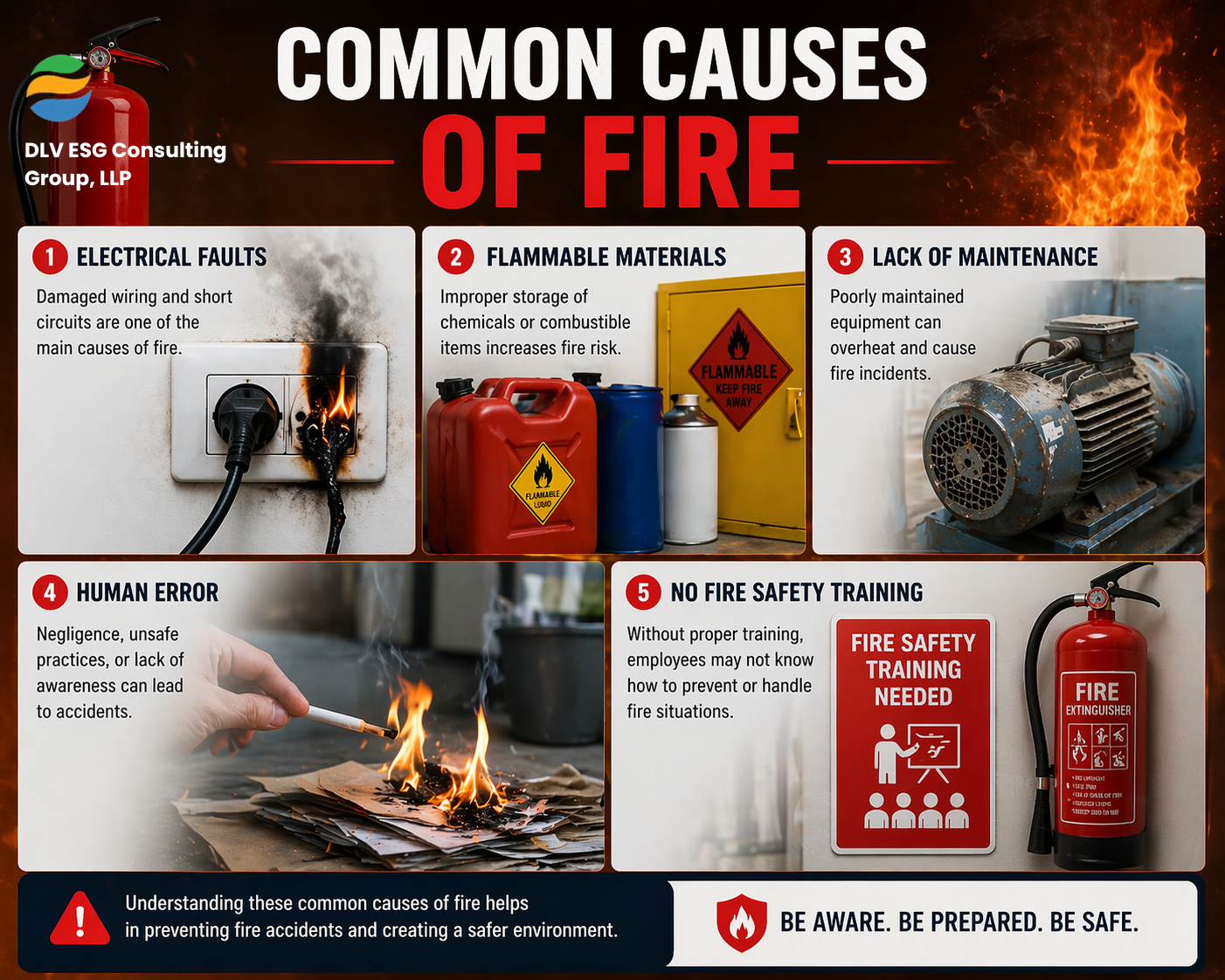
Understanding the common causes of fire is an important part of fire safety. Most fire incidents in workplaces and other environments happen due to basic mistakes and lack of proper safety measures.
Some common causes of fire include:
- Electrical faults – damaged wiring and short circuits are one of the main causes of fire.
- Flammable materials – improper storage of chemicals or combustible items increases fire risk.
- Lack of maintenance – poorly maintained equipment can overheat and cause fire incidents.
- Human error – negligence, unsafe practices, or lack of awareness can lead to accidents.
- No fire safety training – without proper training, employees may not know how to prevent or handle fire situations.
Understanding these common causes of fire helps businesses and individuals take preventive steps and improve overall fire safety.
Fire Safety in Workplace
Fire safety in workplace is essential for smooth business operations and the safety of employees, assets, and infrastructure. Without proper fire safety measures, even a small incident can lead to serious damage and disruption.
Implementing effective workplace fire safety practices helps organizations reduce risks and create a safe working environment.
Companies should ensure:
- Proper fire safety systems – Installation of fire extinguishers, alarm systems, and other equipment to detect and control fire.
- Regular inspection – Routine checks of electrical systems and safety equipment to avoid potential hazards.
- Employee awareness – Making sure employees understand fire risks and basic safety practices.
- Emergency planning – Clear evacuation plans and regular drills so people know how to respond during emergencies.
A safe workplace reduces risks, prevents losses, and improves overall productivity.
To support this, professional guidance can help businesses implement the right systems and training. DLV ESG Consulting Group works with organizations by providing fire safety training, conducting emergency drills, and helping set up practical safety processes so that teams are better prepared and workplaces remain compliant and secure.
Fire Safety Training
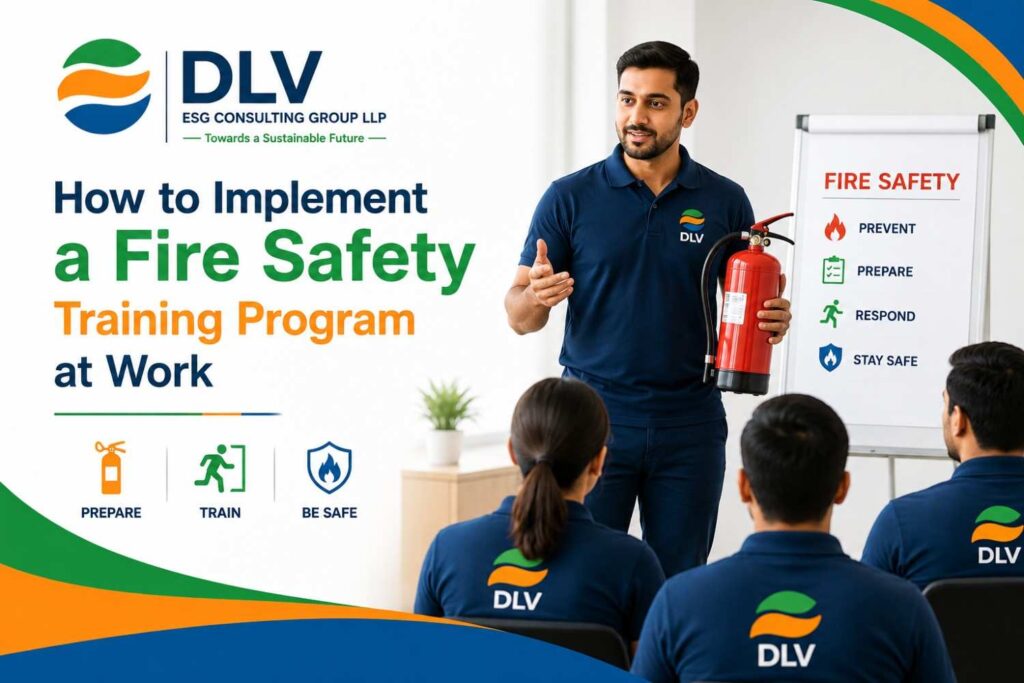
Fire safety training helps employees understand how to handle fire emergencies effectively and respond in a safe and controlled manner. It is an essential part of workplace safety and compliance for every organization.
A well-structured fire safety training program is designed to make employees aware, confident, and prepared for emergency situations.
Training includes:
- How to use fire extinguishers – Practical training on handling different types of fire extinguishers correctly.
- Emergency evacuation process – Step-by-step guidance on safe exit procedures and assembly points.
- Identifying fire hazards – Understanding potential risks in the workplace and how to prevent them.
- Fire safety drills – Real-time practice sessions to improve response during emergencies.
- Fire safety certification – Certification after training to ensure compliance and demonstrate employee readiness.
- Basic first aid training – Initial response techniques to handle injuries and provide immediate medical support during emergencies.
A well-trained team can respond quickly, reduce panic, and control fire situations effectively.
Organizations that invest in structured fire safety training and certification are better prepared for emergencies and compliance requirements. This is where experienced consultants like DLV ESG Consulting Group support businesses by helping them implement practical training programs and improve overall workplace safety.
Basic Fire Safety Measures
Fire safety measures are simple steps that every workplace should follow to prevent fire accidents and ensure safety. These steps help reduce risk and prepare employees for emergencies.
These simple steps, along with basic first aid preparedness, can significantly reduce fire risks and improve overall workplace safety.
Here are some important fire safety measures:
- Install fire extinguishers
Fire extinguishers are used to control small fires before they become dangerous. Every workplace should have properly placed and regularly checked extinguishers so they can be used quickly in case of emergency. - Conduct fire drills
Fire drills help employees practice what to do during a fire. It reduces panic and ensures that everyone knows how to exit the building safely. Regular drills improve response time during real situations. - Maintain electrical systems
Faulty wiring and electrical issues are one of the biggest causes of fire. Regular maintenance helps prevent short circuits and reduces the chances of fire incidents. - Create emergency exits
Clearly marked emergency exits help people leave the building quickly and safely during a fire. Without proper exit planning, people may panic and get stuck. - Train employees regularly
Training helps employees understand fire risks and how to respond during emergencies. A trained team can act quickly and prevent major damage.
These simple steps can significantly reduce fire risks and help prevent major fire incidents, making the workplace safer for everyone.
Conclusion
Fire safety is not just a legal requirement—it is a responsibility that every organization must take seriously. A well-planned fire safety system helps protect employees, safeguard property, and ensure smooth business operations.
Understanding what fire safety is and implementing proper safety measures can significantly reduce risks and prevent major accidents in the workplace.
With the right guidance and training, businesses can create a safe, compliant, and prepared work environment.
Along with fire safety measures, basic first aid knowledge further strengthens emergency preparedness and ensures quick response during critical situations.
At DLV ESG Consulting Group, we support organizations with fire safety training, risk assessment, and compliance solutions to help them stay safe and audit-ready.
Investing in fire safety today can protect your business tomorrow.
Looking for fire safety training and certification?
DLV ESG Consulting Group provides:
Fire Safety Training
Emergency Drills
Certification & Compliance
Contact us today to make your workplace safe and compliant.
Website: https://dlvesg.com
Email Id : info@dlvesg.com
Linkedin: linkedin.com/in/dlv-esg-consulting-4914543b1
Instagram: dlvconsultingroup
This Is helpful contant
Nice information…
Nice. Very important Information for life Safety.
Satisfying
Good knowlege
Very good knowledgeable.
Very easy to. Understand and knowledgeable
Very easy to understand,
Very Nice content easy to understand
Nice Blog Helpful content
Fire safety is important
Thank you for the information , that is very useful for everyone
Well explained