What Does "ESG Strategy" Actually Mean for a Business?
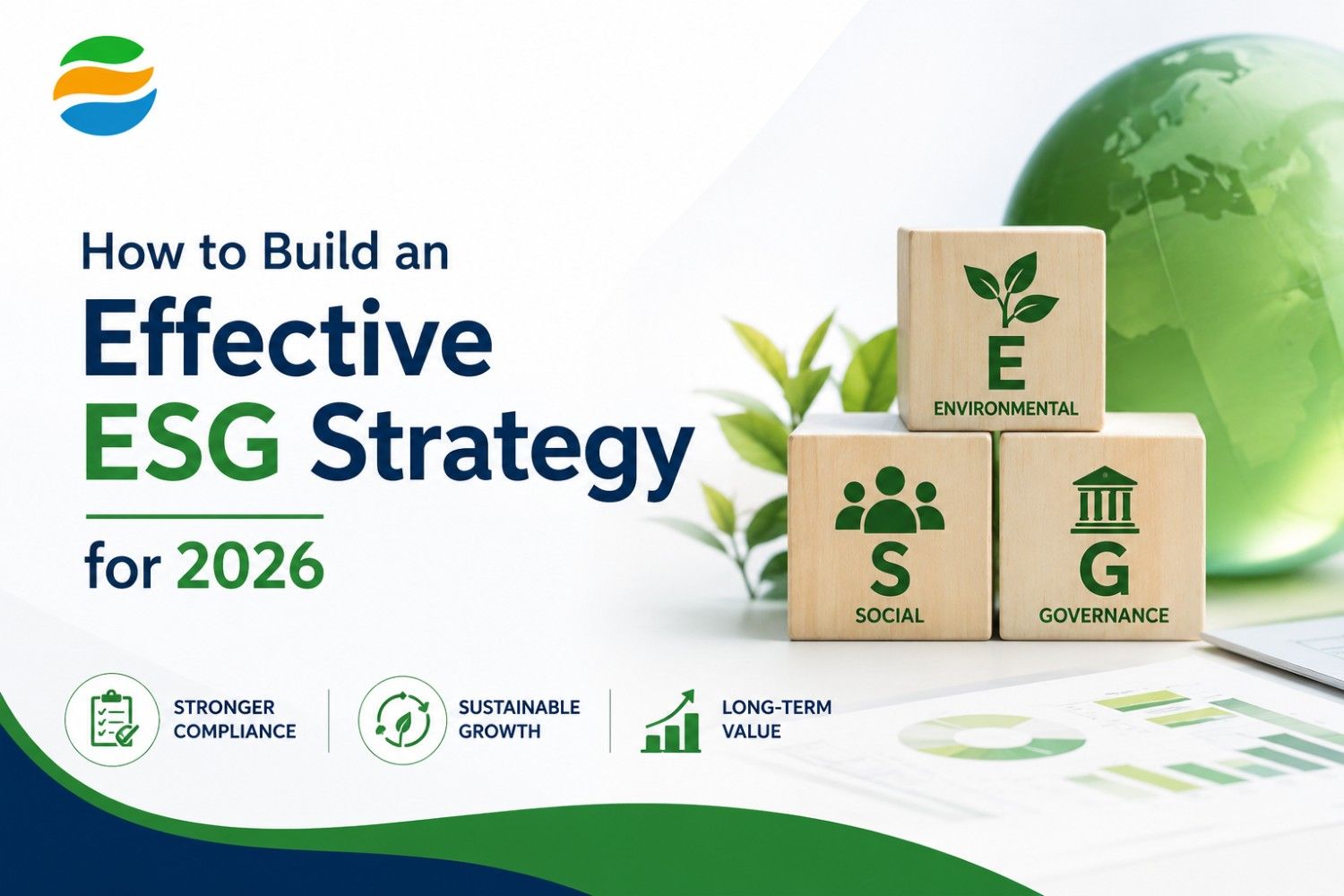
ESG strategy refers to a structured, organization-wide plan that integrates environmental, social, and governance principles into business operations, decision-making, and external reporting. It goes beyond compliance. A genuine ESG strategy connects sustainability commitments to business value.
The three pillars break down as follows:
- Environmental (E): Carbon emissions, energy use, water consumption, waste management, and climate risk
- Social (S): Labor practices, workplace safety, human rights, community impact, and supply chain ethics
- Governance (G): Board structure, anti-corruption policies, transparency, and executive accountability
For Indian companies, the primary regulatory framework governing ESG disclosure is SEBI's BRSR, which requires companies to respond to 140 questions across 98 essential (mandatory) indicators and 42 leadership indicators. Globally, frameworks like GRI (Global Reporting Initiative), TCFD (Task Force on Climate-related Financial Disclosures), and SASB (Sustainability Accounting Standards Board) set the benchmark for investor-grade reporting.
Why 2026 Is a Critical Year for ESG in India
Several regulatory and market shifts make 2026 a pivotal moment for ESG action in India.
BRSR Core assurance is expanding. According to SEBI's phased timeline, limited assurance on BRSR Core indicators applies to the top 150 listed companies from FY 2023–24, extending to the top 250 by FY 2024–25, and to the top 500 by FY 2025–26. By FY 2026–27, all top 1,000 companies will require this assurance—and voluntary assessment will also apply to value chain partners. Businesses that delay preparation risk audit failure and reputational damage.
Supply chain ESG scrutiny is intensifying. According to Breathe ESG's 2026 trends report, Scope 3 measurement requirements and supply chain ESG disclosure expectations are among the defining trends of 2026. Export units supplying to European, US, and UK buyers are increasingly required to meet standards like SMETA (Sedex Members Ethical Trade Audit) and SA 8000 as baseline procurement requirements.
Capital access is ESG-linked. Global investors and development finance institutions now use ESG scores as filters for portfolio decisions. A business without credible ESG data is, effectively, invisible to a growing share of institutional capital.
The businesses that act now will spend 2026 completing audits and winning contracts. Those that wait will spend it catching up.
Step 1: Conduct a Materiality Assessment
Every effective ESG strategy starts with understanding what actually matters—to your business and to your stakeholders.
A materiality assessment identifies the ESG issues most relevant to your industry, operations, and stakeholder expectations. For a textile manufacturer, this might prioritize water consumption, chemical waste, and labor conditions. For an FMCG company, packaging waste, supplier audits, and product safety may rank higher.
The assessment typically involves:
- Mapping your stakeholder landscape (investors, buyers, regulators, employees, communities)
- Reviewing sector-specific risks and ESG priorities
- Interviewing key internal stakeholders on operational risks
- Benchmarking against peer companies and framework guidance
This step is non-negotiable. Without it, businesses spend time and money reporting on metrics that don't reflect their actual risk profile—and fail to satisfy the standards that matter most to their specific stakeholders.
Step 2: Choose the Right ESG Frameworks
Once material issues are identified, the next step is aligning your strategy with the frameworks most relevant to your context.
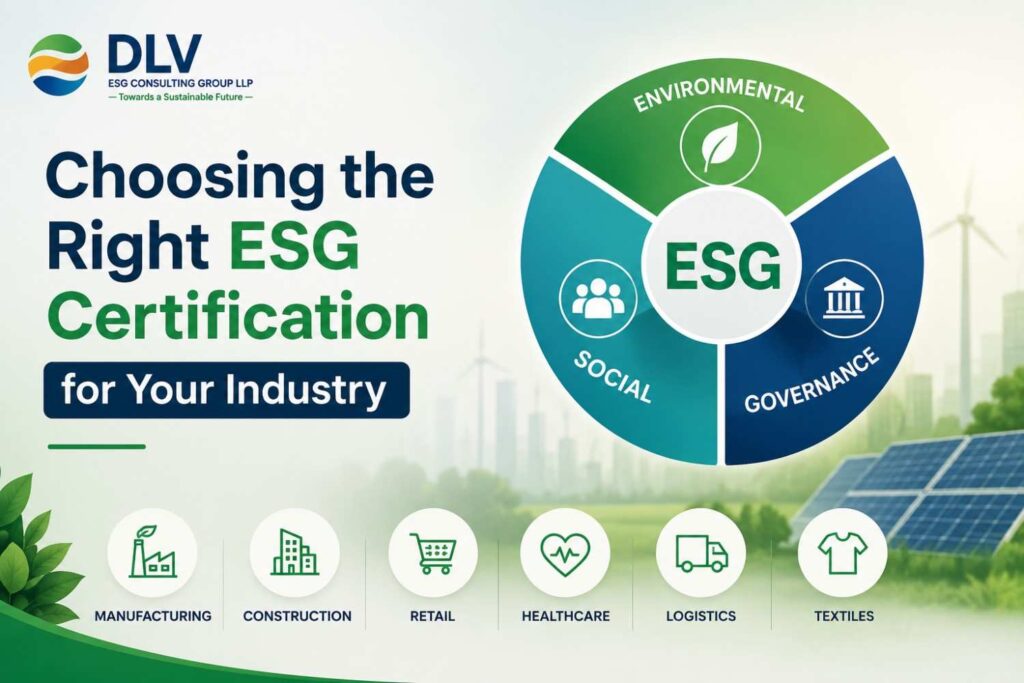
For Indian companies, the core frameworks to understand are:
- SEBI BRSR: Mandatory for top 1,000 listed companies; increasingly required across supply chains
- GRI Standards: The most widely used global sustainability reporting framework; recognized by international investors and buyers
- TCFD: Focused on climate-related financial risk disclosure; increasingly expected by institutional investors
- SASB: Industry-specific metrics for financially material ESG factors
For export-focused businesses and manufacturers, additional standards apply:
- SA 8000 for social accountability and labor rights
- SMETA for ethical trade audits
- ISO 14001 for environmental management systems
- ISO 45001 for occupational health and safety
Choosing the right combination depends on your industry, your buyers, your investors, and your regulatory obligations. This is where expert ESG consulting adds immediate value—mapping the right frameworks to your specific situation rather than applying a one-size-fits-all approach.
Step 3: Set Clear, Measurable ESG Targets
Frameworks provide the structure. Targets give your strategy direction and accountability.
Effective ESG targets are:
- Time-bound: Specify a year (e.g., "reduce Scope 1 emissions by 30% by 2030")
- Measurable: Tied to specific data points you can track and report
- Material: Focused on your most significant ESG impacts, not peripheral metrics
- Aligned: Consistent with framework requirements and stakeholder expectations
For carbon management, this means conducting a full Scope 1, 2, and 3 greenhouse gas emissions assessment before setting targets. Scope 1 covers direct emissions from owned or controlled sources. Scope 2 covers indirect emissions from purchased electricity. Scope 3 covers all other indirect emissions across the value chain—often the largest and most complex category to measure.
Building a credible Net Zero roadmap requires this baseline data. Without it, targets lack credibility with investors, buyers, and regulators.
Step 4: Implement Across Operations
Strategy without implementation is documentation. The most important phase of ESG strategy development is embedding commitments into actual business operations.
This means:
- Updating policies and procedures to reflect ESG commitments (labor standards, environmental controls, governance structures)
- Training employees at all levels on their role in ESG performance
- Establishing data collection systems to track performance against targets
- Integrating ESG criteria into procurement and supplier management
- Achieving relevant certifications to verify compliance through independent audit
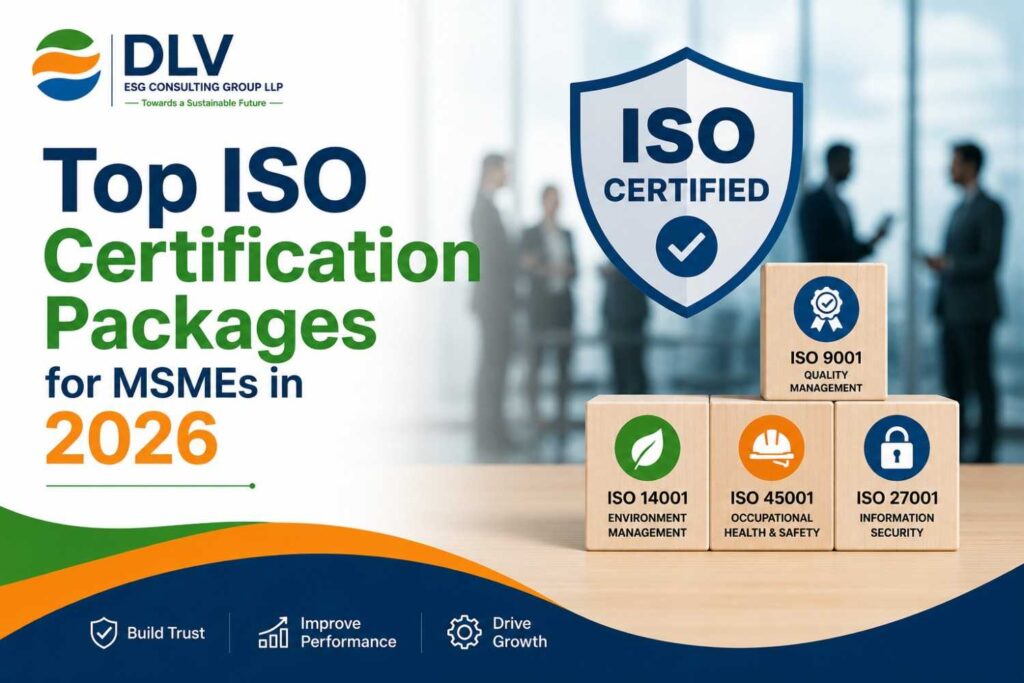
ISO certifications play a critical role at this stage. ISO 14001 certification provides a structured framework for environmental management. ISO 45001 covers occupational health and safety. ISO 9001 establishes quality management systems. ISO 50001 addresses energy management. These certifications don't just satisfy regulatory requirements—they signal operational credibility to global buyers and partners.
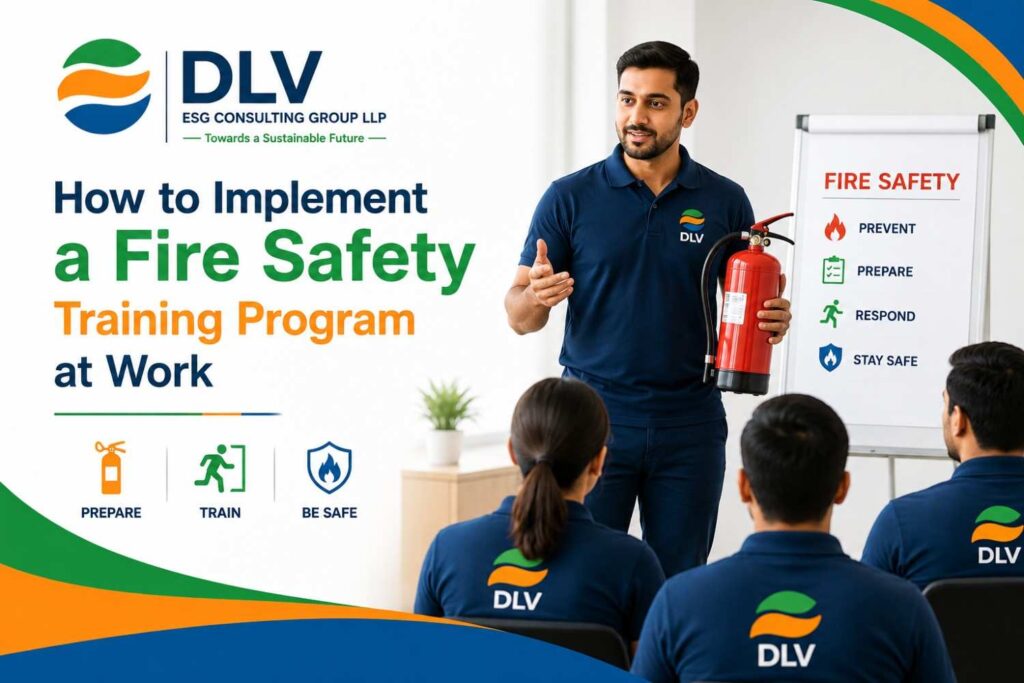
Fire safety compliance is another operational requirement that businesses often underestimate within an ESG framework. Under Indian fire safety regulations, factories, warehouses, and commercial establishments are required to maintain certified fire safety protocols, including staff training on prevention, evacuation, and emergency response.
Step 5: Report, Disclose, and Get Assured
ESG performance only becomes valuable when it's credibly communicated. Reporting is how businesses translate internal data into external trust.
For BRSR compliance, this means preparing a comprehensive Business Responsibility and Sustainability Report that accurately addresses all required indicators, aligned with SEBI's format and timeline. For companies reporting to global stakeholders, GRI-aligned disclosures provide the international credibility investors and buyers expect.
From FY 2024–25, SEBI mandates limited assurance on BRSR Core indicators for eligible companies. This means an independent third party must verify the accuracy of your disclosures. Preparing for this assurance requires clean data, documented processes, and audit-ready systems—not something that can be assembled at the last minute.
Step 6: Review, Improve, and Adapt
ESG is not a one-time project. Regulatory requirements evolve. Stakeholder expectations shift. Climate science advances. A credible ESG strategy includes a regular review cycle—typically annual—to reassess materiality, update targets, close performance gaps, and incorporate emerging standards.
The businesses that build this review cycle into their operating rhythm are the ones that maintain ESG credibility over time, rather than scrambling to catch up with each new regulatory update.
Building and implementing an ESG strategy requires technical expertise, regulatory knowledge, and practical experience across industries. That's precisely what DLV ESG Consulting Group LLP brings to every client engagement.
Based in Gurgaon, Haryana, DLV ESG Consulting Group LLP is a trusted ESG and sustainability consulting firm serving manufacturers, exporters, MSMEs, textiles companies, FMCG businesses, and infrastructure firms across India. The firm has certified over 500 businesses, covers 15+ ISO standards, operates on a 100% NABCB-compliant process, and delivers results within a 3–6 month average timeline.
DLV ESG's core services include:
- ESG Strategy & Advisory: Custom ESG roadmaps aligned with SEBI BRSR, GRI, TCFD, and SASB frameworks, from materiality assessment through full implementation
- BRSR Reporting & Compliance: Complete preparation of Business Responsibility and Sustainability Reports—accurate, on-time, and audit-ready
- ISO Certification Support: End-to-end support for ISO 14001, ISO 45001, ISO 9001, ISO 50001, and more—including gap analysis, documentation, and audit preparation
- Carbon Footprint & Net Zero: Scope 1, 2, and 3 emissions assessments and Net Zero roadmap development aligned with international climate standards
- Social & Labour Compliance: Advisory and audit support for SA 8000, SMETA, POSH compliance, and ethical trade certifications for export units
- Fire Safety Training & Audit: Certified workplace fire safety training and fire risk audits for factories, warehouses, and offices across India
DLV ESG serves businesses of all sizes—from listed companies requiring BRSR assurance to MSMEs seeking their first ISO certification. The firm offers structured, phased support designed to fit operational realities and budget constraints.
Build Your ESG Strategy Before the Deadline Does It for You
The regulatory calendar for ESG in India is moving in one direction: more mandatory, more stringent, and expanding to more companies. BRSR Core assurance timelines are locked in. Buyer-mandated social compliance audits are already a condition of trade for thousands of exporters. Scope 3 reporting expectations are tightening globally.
The businesses that treat ESG as a strategic priority—rather than a last-minute compliance task—will be better positioned to access capital, win international contracts, and build lasting stakeholder trust.
DLV ESG Consulting Group LLP helps businesses take that first step and every step that follows.
Get in touch for a free consultation:















Knowledge
Its a great topic
very helpful content