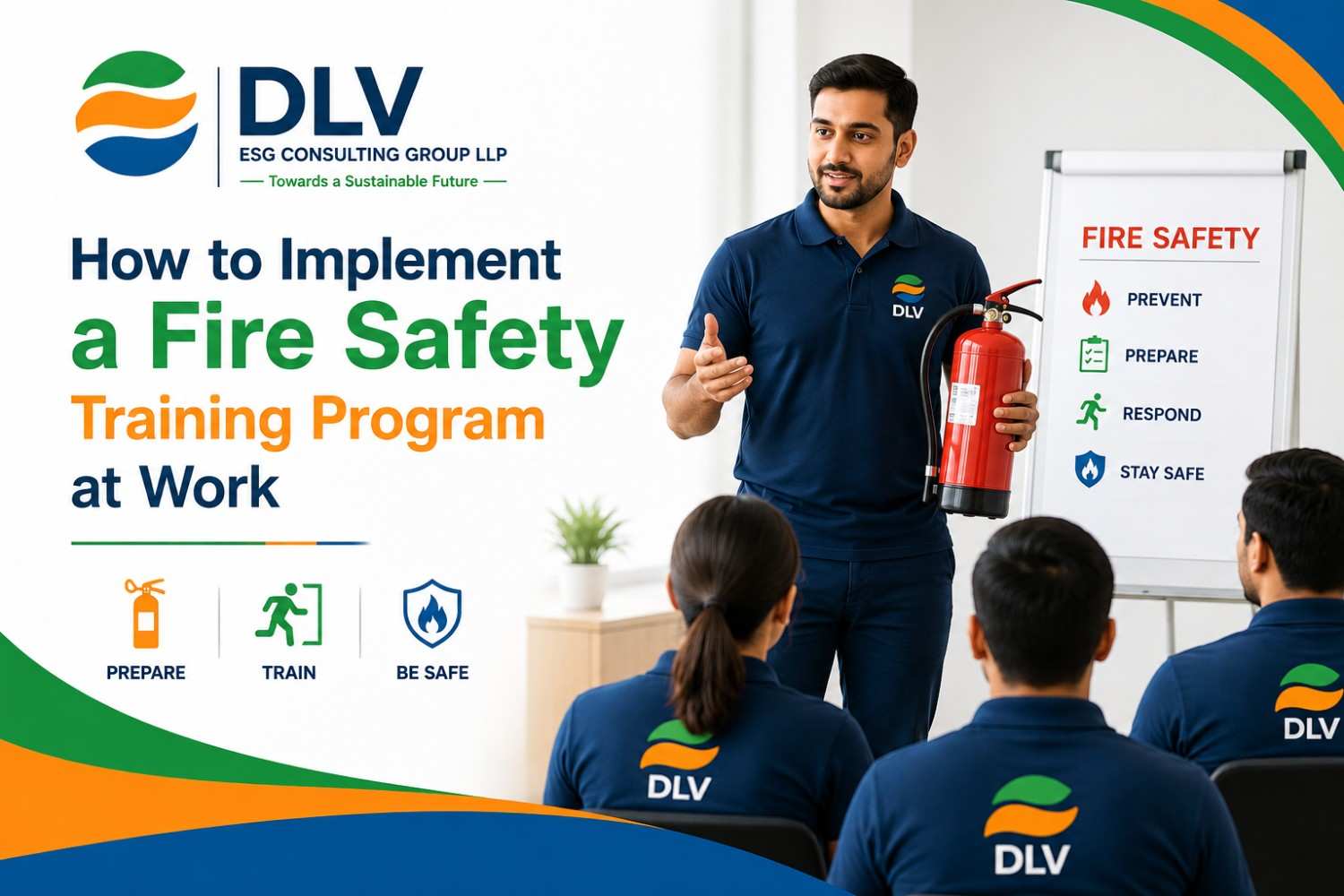
How to Implement a Fire Safety Training Program at Work
Quick answer: A fire safety training program equips employees to prevent, recognize, and respond to workplace fires. To implement one, identify fire hazards, train staff on fire response, develop clear evacuation plans, conduct regular drills, and ensure equipment is properly maintained. Most companies are legally required to provide this training, and partners like DLV ESG Consulting Group can help businesses deliver it while staying compliant.
Fires can occur in any workplace, not just factories or commercial kitchens. A faulty toaster, overloaded power strip, or frayed cable can spark a fire in an office. According to the National Fire Protection Association, non-residential fires in the U.S. caused 1,400 injuries, 150 deaths, and over $4 billion in property damage in 2022. These statistics highlight the importance of preparation for every business, regardless of size or industry.
A fire safety training program is a valuable investment. It protects employees, safeguards property, and ensures operations run smoothly. It also ties into the Social pillar of ESG (Environmental, Social, and Governance), where workplace safety and employee well-being are critical indicators of responsible business practices.
This guide explains what fire safety training entails, why it’s mandatory, and the five steps to build an effective program. It also explores how DLV ESG Consulting Group supports businesses with training, drills, and certification to create safer, compliant workplaces.
What is a fire safety training program?
A fire safety training program consists of structured lessons and practice sessions that teach employees how to prevent and respond to fire incidents. It covers fire prevention, emergency response, evacuation, drills, and equipment handling.
A strong program does more than meet compliance requirements—it instills confidence. Employees who can identify hazards, use fire extinguishers, and evacuate quickly are better equipped to act in an emergency, potentially saving lives.
DLV ESG Consulting Group, based in Gurgaon, India, specializes in designing and implementing such programs. Serving industries like manufacturing, textiles, FMCG, and exports, they provide training, drills, and certifications to help businesses create safer workplaces.
Is fire safety training legally required?
Yes, most countries require businesses to provide fire safety training for employees.
In the U.S., the Occupational Safety and Health Administration (OSHA) mandates training on recognizing fire hazards, using fire extinguishers, and evacuating safely. Certain industries, like construction and maritime, have stricter regulations. Additionally, 28 U.S. states have workplace safety plans that meet or exceed OSHA standards.
Globally, similar legal requirements exist, and many companies pursue certifications like ISO 45001 (Occupational Health and Safety Management Systems) to formalize their approach. Meeting only the minimum requirements is insufficient—comprehensive training ensures employees are prepared to protect themselves and their coworkers.
Five Steps to Build a Fire Safety Training Program
Creating an effective fire safety program involves five key steps: teaching prevention, training fire response, developing evacuation plans, conducting drills, and maintaining equipment.
Teach fire prevention
Prevention is the first line of defense. Train employees to identify and address potential hazards before they escalate.
Common workplace fire hazards include:
- Electrical issues: Faulty wiring, overloaded outlets, and space heaters.
- Flammable materials: Proper storage and handling of liquids and gases.
- Kitchen equipment: Regular checks on appliances, as kitchen fires account for 30% of workplace incidents.
- Combustible items: Excess dust or loose paper can fuel fires.
- Smoking: Ensure proper disposal of cigarette butts away from flammable materials.
Train employees on fire response
When a fire occurs, immediate action is critical. Employees must know when to fight a fire and when to evacuate. Training should cover:
- Recognizing workplace-specific fire hazards and risks.
- Proper use of fire extinguishers and suppression systems.
- Reporting fires through emergency communication systems.
- Evacuation procedures and basic first aid for injured colleagues.
High-risk workplaces may also require an in-house firefighting team, while other employees should focus on evacuating safely.
Develop evacuation plans
A comprehensive evacuation plan includes:
- Primary and backup routes: Ensure alternatives in case primary exits are blocked.
- Responsibilities: Assign roles like route guides, floor monitors, and fire wardens.
- Assembly points: Designate safe gathering areas and backups.
- Communication protocols: Use reliable systems for alerts and check-ins.
Conduct regular fire drills
Fire drills ensure employees understand and can execute the evacuation plan. Effective drills include:
- Preparation: Communicate the plan and roles beforehand.
- Realistic scenarios: Simulate blocked exits or missing fire wardens to test adaptability.
- Feedback: Use observations and employee input to refine procedures.
DLV ESG Consulting Group incorporates realistic drills into their training programs, helping teams build confidence and improve response times.
Maintain fire safety equipment
Emergency equipment must be in working order. Regular tasks include:
- Inspecting and replacing fire extinguishers as needed.
- Testing alarms and emergency lights.
- Verifying exit signs and battery backups.
- Keeping detailed maintenance records for inspections and audits.
Fire Safety and ESG
Fire safety training is central to the Social (S) aspect of ESG, which emphasizes employee safety and well-being. A strong safety culture minimizes workplace accidents, reduces risks, and supports responsible business operations. It also builds trust with clients and investors who value companies committed to safety and sustainability.
How DLV ESG Consulting Group Can Help
DLV ESG Consulting Group helps businesses implement practical fire safety programs through:
- Training: Teaching hazard identification, extinguisher use, and emergency response.
- Drills: Hands-on practice for faster, more confident responses.
- Certification: Ensuring compliance with legal standards like ISO 45001.
- First Aid Training: Preparing employees to assist injured colleagues in emergencies.
Their expertise helps organizations across industries create safer, more compliant workplaces.
Fire Safety as an Ongoing Priority
Fire safety is not a one-time effort. Regular training, plan updates, and risk management should be part of daily operations. As workplaces evolve, so should fire safety measures. Focus on prevention, training, evacuation plans, drills, and equipment maintenance to create a culture of safety.
Ready to improve your fire safety program? DLV ESG Consulting Group offers training, drills, and certification to keep your workplace safe and compliant—protecting your people and business.
Frequently Asked Questions
Provide full training annually, with regular drills and updates for workplace changes.
Training provides knowledge and skills, while drills allow employees to practice those skills in simulated emergencies.
All employees need basic training, while roles like fire wardens or workers handling flammable materials require additional instruction.
Basic training can start within weeks, while comprehensive programs may take months. Regular refreshers ensure long-term effectiveness.
Costs vary based on company size, training type, and specific needs. Many providers offer scalable programs, and the investment is far less than the potential cost of a fire.
Great insights! Thanks for sharing this valuable information.
This was a very informative and well-written article.
I learned something new today. Thanks for the excellent post!
Great perspective! The examples made the topic easier to understand.